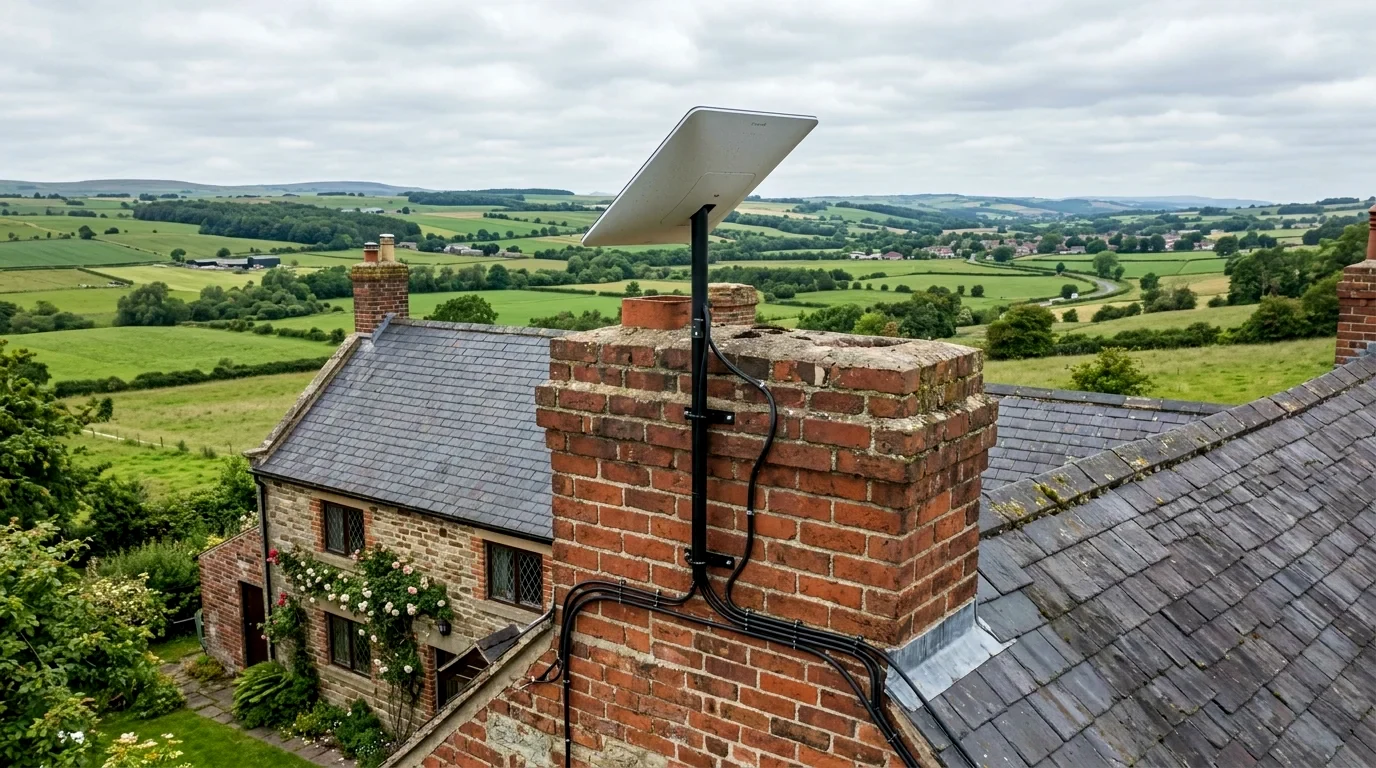

For rural UK households, farm estates, and village residents trapped on outdated copper broadband, choosing the right high-speed alternative is often a critical financial and practical decision. The two dominant solutions today are SpaceX Starlink Satellite Broadband and Cellular 4G/5G Home Broadband Routers (utilising networks like EE, Three, Vodafone, or O2). As professional engineers deploying both systems across the UK, our independent analysis breaks down real-world performance, latency, weather impact, and 2026 total ownership costs.
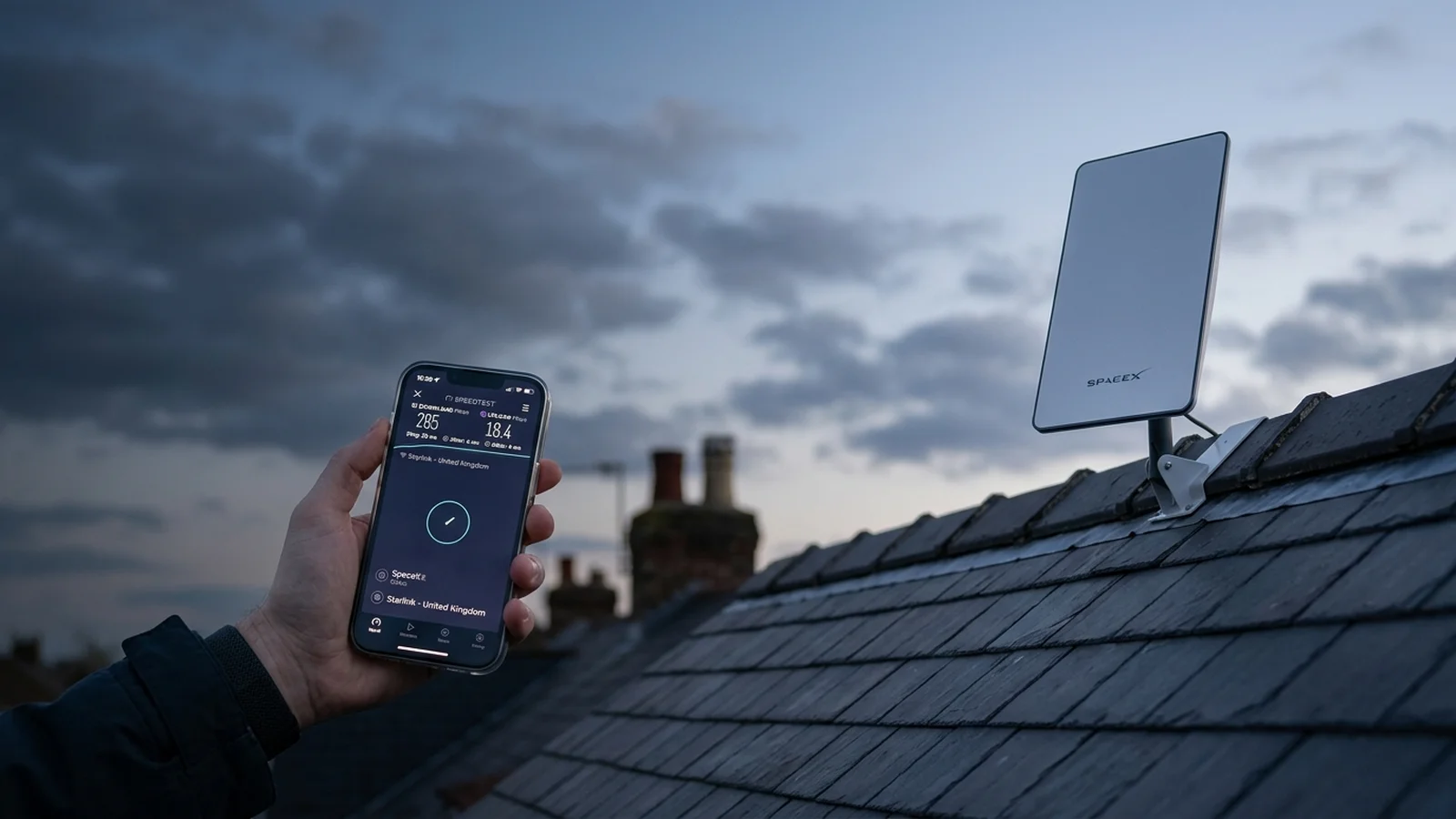
📡 Quick Verdict (TL;DR)
Choose Starlink if you live in a deep valley, remote dale, or wooded area where 4G/5G mast signals are weak or heavily congested, and you require consistent 180–320Mbps speeds for remote working, 4K streaming, and multi-user households. Choose 4G/5G if you live within 1.5 miles of an uncongested cell tower, have direct line-of-sight to the mast, and want to keep monthly subscription costs below £35/month.
1. Architecture: Low Earth Orbit (LEO) vs Terrestrial Cell Masts
The fundamental difference between these two broadband technologies lies in their underlying transmission medium:
- Starlink LEO Constellation: Connects to a constellation of over 6,000 satellites orbiting at an altitude of approximately 550 kilometres. Because the satellites are 65 times closer to Earth than old geostationary satellites (like Tooway or Astra), latency is comparable to terrestrial fixed-line connections. Phased array electronic steering tracks satellites reliably across the sky.
- Cellular 4G/5G Routers: Connect to ground-based cellular masts via radio frequency bands (typically Band 20 at 800MHz for long-range 4G, or Band n78 at 3.5GHz for ultra-fast 5G). Signals are subject to terrestrial attenuation: dense woodland, hills, wet tree canopies in summer, and the structural insulation of buildings severely degrade signal strength.
2. Empirical Field Performance Benchmarks (2026 UK Tests)
Peak Evening Congestion Comparison: Starlink vs Rural 4G Cellular Masts
Over hundreds of speedtests conducted across Yorkshire, Lancashire, and Cumbria, here are the real-world performance metrics:
| Performance Metric | SpaceX Starlink Gen 3 | Rural 4G (High-Gain Antenna) | Rural 5G (Direct Line of Sight) |
|---|---|---|---|
| Download Speeds | 180 – 320 Mbps | 20 – 65 Mbps | 80 – 190 Mbps |
| Upload Speeds | 20 – 38 Mbps | 5 – 15 Mbps | 12 – 30 Mbps |
| Typical Ping (Latency) | 25 – 42 ms | 45 – 85 ms | 22 – 38 ms |
| Peak Time Congestion | Negligible (< 10% dip) | Severe (up to 70% drop at 8 PM) | Moderate (mast bandwidth sharing) |
| Data Caps / Throttling | Unlimited Standard Data | Often capped or FUP throttled | Unlimited on select tariffs |
3. Real 2026 Cost Breakdown: Total Cost of Ownership
When evaluating total expenses, remember to factor in initial hardware, professional bracket installation, and ongoing monthly subscription fees:
Starlink Standard Kit
- • Hardware Kit: £199 – £299 (frequently discounted by SpaceX)
- • Monthly Service: £75 / month (no fixed contract, 30-day rolling)
- • Professional Roof Install: Approx. £250 – £350
- • Year 1 Total Cost: ~£1,349 – £1,549
4G/5G External High-Gain Setup
- • Hardware Kit: £150 – £300 (Outdoor MIMO antenna + router)
- • Monthly Service: £22 – £38 / month (unlimited data SIM)
- • Professional Mast Install: Approx. £180 – £260
- • Year 1 Total Cost: ~£594 – £916
4. Mast Congestion: The Hidden Curse of 4G Routers
The single most frequent customer complaint we encounter with rural 4G broadband is evening mast congestion. At 2 PM on a Tuesday, an outdoor 4G antenna might test at a healthy 50Mbps. But between 7:30 PM and 10:00 PM, when hundreds of nearby villagers stream Netflix and scroll smartphones, the local cell mast runs out of backhaul capacity. Download speeds can plummet below 5Mbps, causing video buffering and Zoom dropouts.
Starlink, by contrast, dynamically routes traffic across dozens of overhead satellites passing through its phased array beam every 15 minutes, with high-capacity optical space lasers balancing load across ground gateway stations. As a result, evening speed degradation on Starlink is negligible.
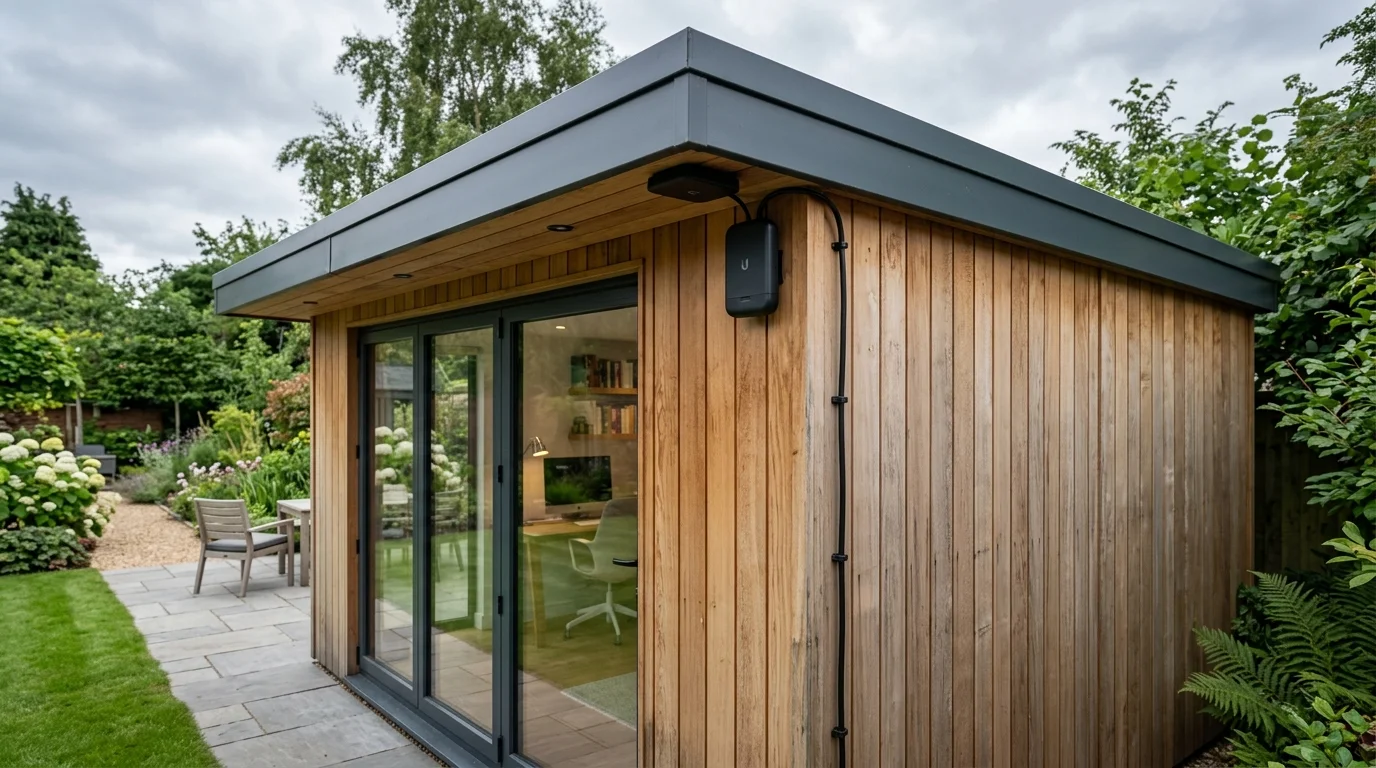
Capacity & Mast Congestion Realities in Rural UK
BLUF Direct Answer: While 4G/5G mobile broadband can achieve 50-80Mbps during off-peak hours, cellular masts suffer severe bandwidth throttling and latency spikes over 120ms during peak evening hours, whereas Starlink delivers consistent 180-280Mbps speeds unaffected by local phone mast congestion.
Rural 4G and 5G connections share fixed radio sector capacity with thousands of local mobile phones, tractors, and tourist devices. In holiday areas across North Yorkshire, the Lake District, and the Peak District, evening mobile broadband speeds frequently collapse from 60Mbps down to under 5Mbps between 7:00 PM and 10:30 PM.
SpaceX Starlink operates via a constellation of thousands of Low Earth Orbit (LEO) satellites communicating over Ku-band laser links to ground teleport stations. Because bandwidth is routed dynamically across hundreds of orbital planes, rural UK users maintain low 28ms to 38ms latency and rock-solid 200Mbps+ throughput even in deep valleys where 4G signals fail completely.
| Performance Factor | 4G/5G Rural Router | SpaceX Starlink Gen 3 |
|---|---|---|
| Average Download Speed | 25 - 65 Mbps (Variable) | 180 - 280 Mbps (Consistent) |
| Peak Evening Latency (Ping) | 65 - 150 ms (Jitter prone) | 28 - 36 ms (Stable LEO) |
| Monthly Data Caps | Fair usage caps / Speed throttling | Unlimited Uncapped Data |
| Weather & Valley Resistance | Blocked by hills & dense foliage | Requires clear northern sky view |
Starlink & Aerial Structural Mount & Gale Tolerance Calculator
Calculate the required steel mast gauge, bracket standoff clearance, and lashing cradle tension needed to withstand up to 90mph UK Atlantic storm gusts with 0.0° beam deflection.
How to Determine if Starlink Outperforms 4G/5G at Your Property
Diagnostic speed and signal audit process for rural homeowners.
Run Peak-Hour 4G Speedtest
Measure download speed and ping jitter at 8:30 PM on a Friday using an external antenna router.
Audit Starlink Obstruction Sky Cone
Download the Starlink app and stand in the intended dish location to verify 0.0% obstruction.
Calculate Total Monthly Cost & Equipment
Compare 4G unlimited SIM plans (£25-£35/mo) with Starlink Residential (£75/mo) against business and streaming bandwidth needs.
5. Dual-WAN Hybrid Failover: The Ultimate Rural Business Setup
For remote business owners, rural veterinary practices, farm management hubs, or home workers who cannot afford a single minute of downtime, our lead engineer Gary Pearce regularly deploys a Dual-WAN Hybrid Setup:
- Primary WAN: Starlink Gen 3 delivering 250Mbps+ for all day-to-day operations and heavy downloads.
- Secondary WAN (Failover): A low-cost £15/month 4G backup SIM connected to a dual-WAN router (such as a DrayTek Vigor or UniFi Gateway).
- Automatic Hitless Switchover: If severe storm conditions or satellite maintenance causes a brief 10-second interruption on Starlink, the router reliably fails over to 4G in under 2 seconds without dropping active phone calls or sessions.
Learn more about hardware positioning in our guide to Starlink chimney mounting vs roof apex brackets, check how Starlink handles winter weather in Starlink in high winds and snow, or book our professional Starlink installation team for a free site obstruction survey.