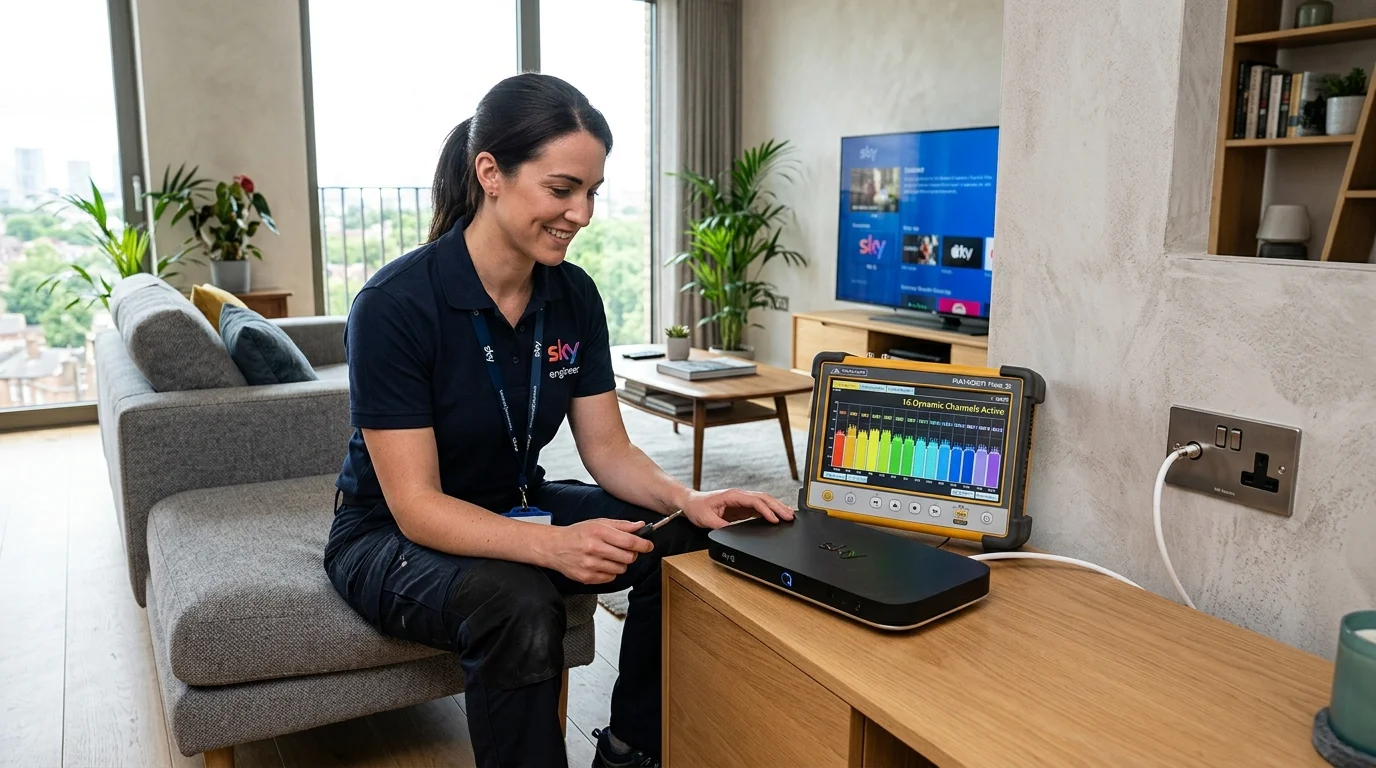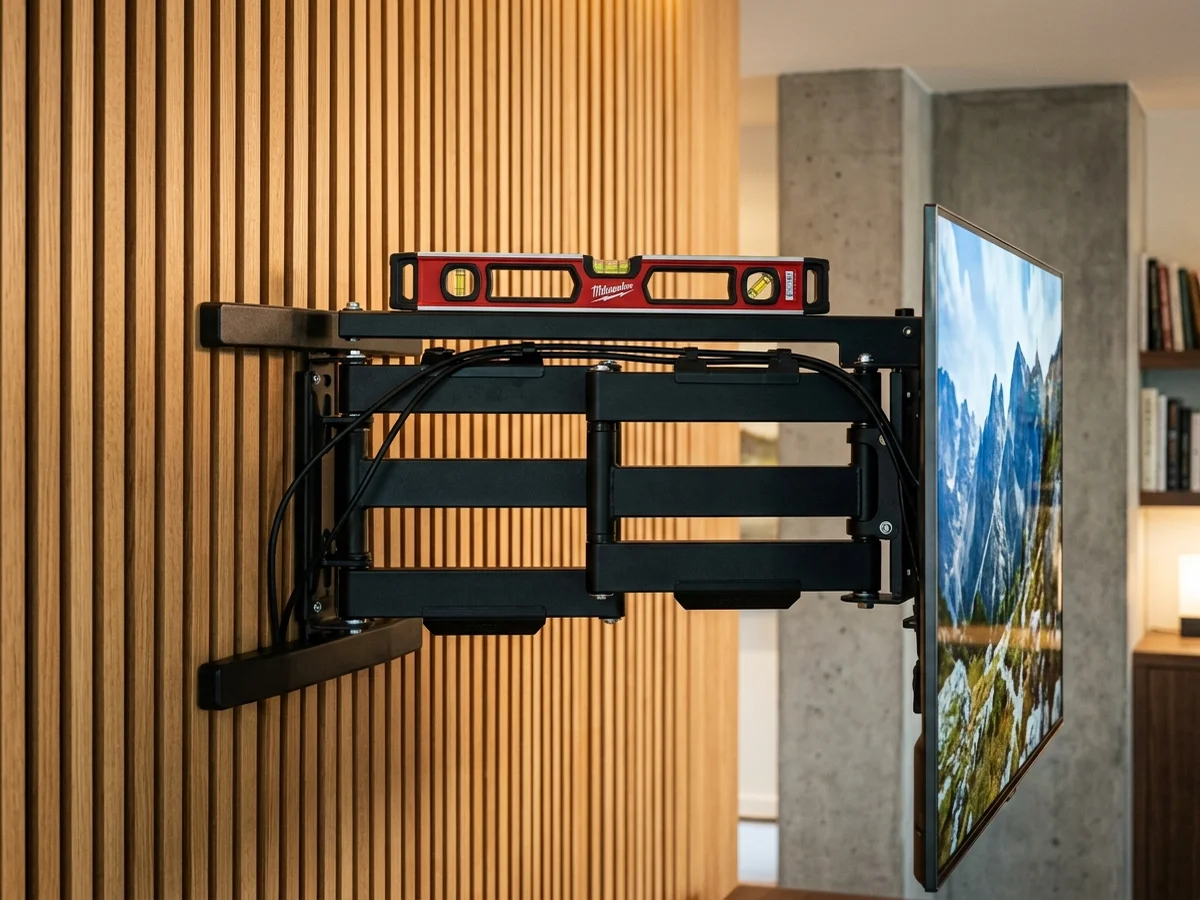
When Sky launched its engineered all-in-one streaming television, Sky Glass, it eliminated the need for satellite dishes and set-top boxes. However, for homeowners wanting to mount Sky Glass on a wall, it presents a substantial structural challenge. Unlike typical ultra-thin modern televisions, Sky Glass houses a reinforced anodised aluminium chassis, a heavy glass acoustic baffle, and an integrated six-speaker Dolby Atmos sound enclosure featuring a powerful built-in subwoofer. In this engineering guide, lead installer Gary Pearce explains how to safely mount 43", 55", and 65" Sky Glass units on UK walls without risking structural collapse.
⚖️ Sky Glass Weight Reality Check
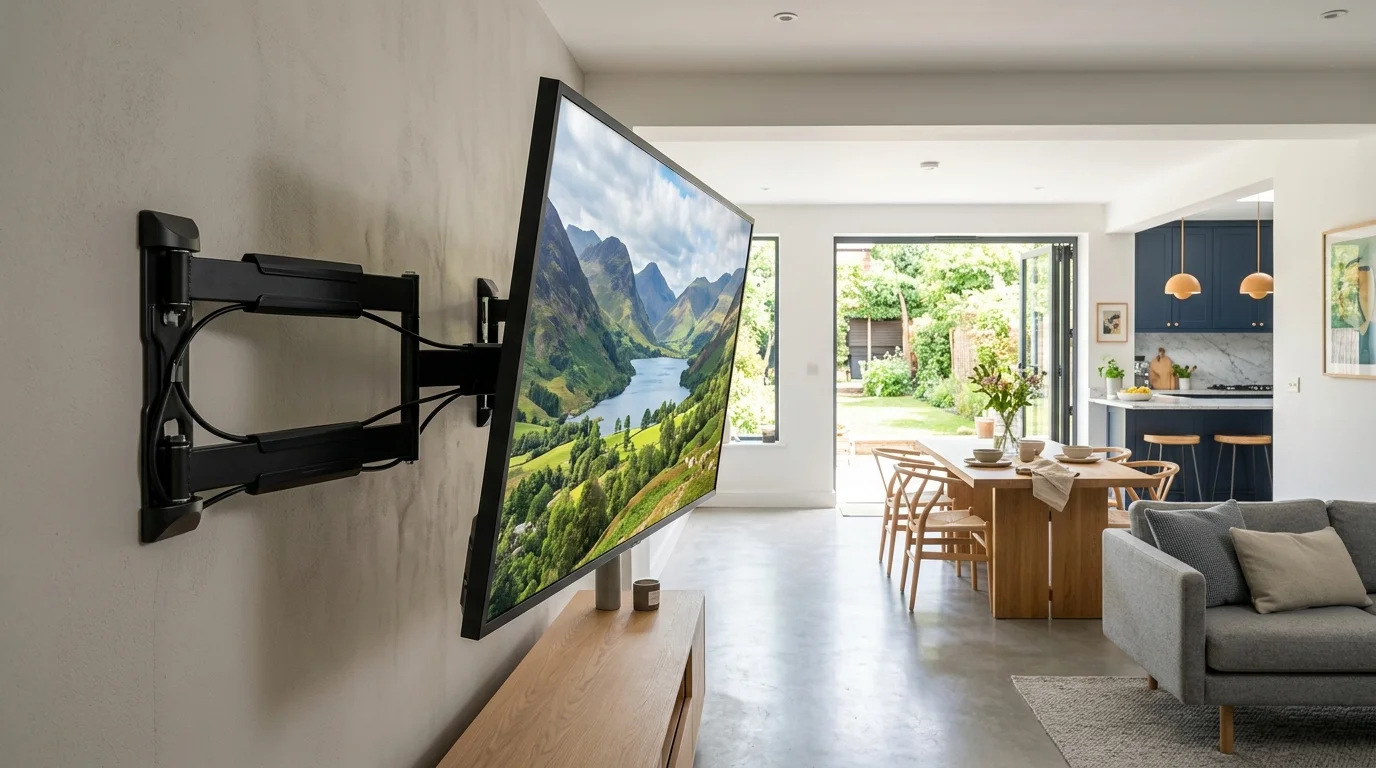
At 28kg, the 65-inch Sky Glass is nearly twice as heavy as a comparable 65-inch OLED. Standard plasterboard wall plugs, spring toggles, and plastic GripIt fixings are fundamentally unsuitable and pose a severe hazard of ripping out under dynamic load.
1. Proprietary Sky Glass Bracket vs Universal VESA Mounts
Sky Glass arrives with a proprietary two-piece slide-in mounting plate cleverly integrated into the base of the rear chassis:
- The Included Sky Wall Bracket: Consists of a heavy steel wall plate and two interlocking vertical pins. While high quality, it mounts the TV extremely close to the wall (less than 15mm clearance), making cable dressing and socket access tight.
- Universal VESA Compatibility: If you prefer a tilting or full-motion cantilever arm bracket, Sky Glass features standard VESA mounting patterns (typically VESA 400x400 on the 65"). However, you must use high-tensile M8 bolts with precise thread depth spacers to avoid bottoming out against the internal soundbar voice coils.
2. Anchoring Sky Glass into Dot and Dab Plasterboard
Sky Glass Integrated Soundbar Weight & Acoustic Vibration Decoupling
Over 80% of modern homes in the UK feature "dot and dab" drylining (plasterboard glued with adhesive dabs over thermalite blockwork). As detailed in our comprehensive guide on TV wall mounting on dot and dab drywall, tightening mounting bolts directly into plasterboard crushes the fragile 20mm air cavity behind the board.
For all Sky Glass installations, our engineers use CoreFix zinc-plated steel sleeve anchors. The steel core bridges the air gap entirely, ensuring that the 28kg weight of the TV is supported 100% by the structural masonry wall behind, never the fragile gypsum plasterboard. We test every anchor point with a 100kg downward deflection audit before hanging the unit.
3. Managing Subwoofer Acoustic Vibrations on Walls
Sky Glass features an upward-firing subwoofer and front-firing stereo drivers producing up to 215 watts of peak audio power. When mounted tightly against a hollow stud partition, low-frequency bass notes (between 40Hz and 120Hz) transfer directly into wall studs, causing severe sympathetic acoustic buzzing and rattling in adjoining rooms.
To prevent this, our engineers install high-density closed-cell acoustic decoupling neoprene pads behind the steel bracket plate. These pads isolate mechanical vibrations from the wall structure, allowing bass frequencies to radiate into the living room rather than resonating through your walls.
Heavy Acoustic Substrate Rigging: Managing Sky Glass 35kg+ Weight
BLUF Direct Answer: Sky Glass televisions weigh between 28kg and 35kg due to their integrated 6-speaker Dolby Atmos acoustic soundbar and heavy aluminium chassis, requiring structural heavy-duty anchors like CoreFix 120 or timber stud direct fixing rather than standard hollow plasterboard toggle plugs.
Unlike standard lightweight LED televisions, Sky Glass integrates an aluminium sub-chassis, front acoustic speaker chamber, and internal power supply directly into the television casing. A 65-inch Sky Glass weighs 35.0 kg without its table stand—exceeding the safe working shear load of standard spring toggles or plastic plasterboard anchors.
When installed on dot-and-dab walls, dynamic acoustic vibrations from the built-in subwoofers can loosen traditional cavity plugs over time. ADI Communications anchors the official Sky Glass wall bracket through the plasterboard cavity directly into the solid thermalite or brick blockwork using heavy-gauge steel CoreFix sleeve fixings, guaranteeing 100kg+ shear capacity.
| Sky Glass Model | Weight (Wall Only) | Acoustic Spec | Mandatory Wall Anchor |
|---|---|---|---|
| Sky Glass Small (43″) | 19.0 kg | 3.1.2 Atmos (6 speakers) | CoreFix 100 or Dual Timber Studs |
| Sky Glass Medium (55″) | 28.0 kg | 3.1.2 Atmos (6 speakers) | CoreFix 100/120 Heavy Steel Sleeve |
| Sky Glass Large (65″) | 35.0 kg | 3.1.2 Atmos (215W output) | CoreFix 120 x 6 or Solid Masonry M10 |
TV Wall Mounting Bracket & Structural Anchor Selector
Identify the exact anchor specification, drill bit diameter, and bracket rating needed to safely suspend heavy OLED and LED screens up to 85″ with zero drywall pull-out risk.
How to Mount Sky Glass TV on a Plasterboard Wall Safely
Professional mounting procedure for heavy acoustic Sky Glass screens.
Locate Solid Substrate Behind Drywall
Drill a 3mm test pilot hole through plasterboard until masonry block or timber stud is contacted.
Drill 10mm Hole into Masonry Block
Drill 100mm deep using rotary masonry mode without hammer to protect brittle blockwork.
Tap in Steel Bridging Sleeves
Insert the CoreFix plug and drive the heavy steel sleeve flush with the plasterboard surface.
Fasten Sky Glass Bracket & Secure Latches
Drive heavy 100mm flange screws through the bracket, lock screen into mounting lugs, and tighten bottom retaining screws.
4. Cable Management & Power Routing for Sky Glass
Because Sky Glass streams all live TV and on-demand content over Wi-Fi or Ethernet, you only need to run two cables to the TV:
- Mains Power Cable: Standard IEC power lead. For a completely cable-free aesthetic, we install a recessed low-profile 13A unswitched socket directly behind the TV chassis.
- Hardwired Cat6 Ethernet: While Sky Glass supports Wi-Fi, 4K HDR live sports streaming requires zero jitter. Running a dedicated Cat6 cable back to your router or switch eliminates buffering, as detailed in our guide to Cat6 vs Cat6A home data cabling.
Explore alternative bracket solutions in our OLED vs QLED wall mounting comparison, learn how to conceal wires in how to hide TV cables without wall chasing, or book our professional TV wall mounting service today across Yorkshire and Lancashire.