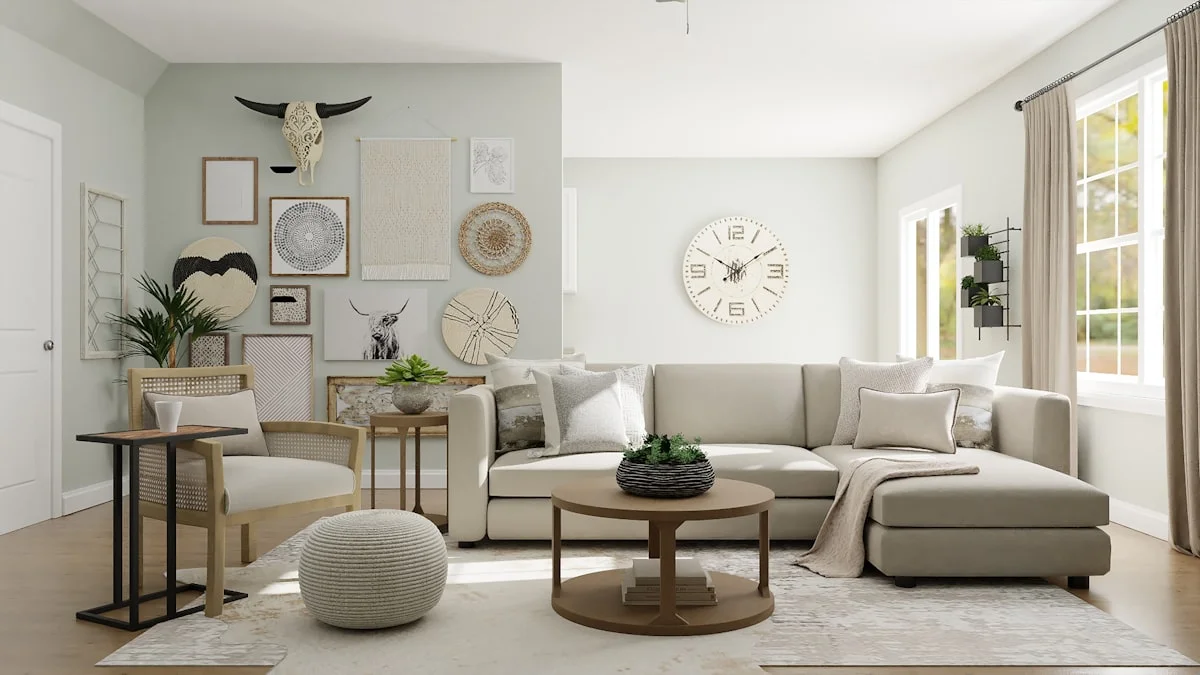

Nothing ruins the modern luxury of a wall-mounted flat-screen television faster than a tangled bird's nest of black HDMI leads, power cords, and aerial cables dangling down the wall. However, for many UK homeowners—especially renters, owners of historic solid-brick properties, or those who have recently redecorated—cutting into solid masonry with a heavy wall chaser to bury cables is simply not practical. It creates clouds of fine brick dust, requires skilled plastering, and can easily cost £400+ per room in redecoration expenses. In this guide, lead engineer Gary Pearce shares 5 clean, architectural methods to hide TV cables without chasing a single groove into your plaster.
⚡ UK Electrical Safety Rule (Part P Building Regulations)
Never bury a standard flexible PVC power extension lead or plug permanently inside a sealed wall cavity. UK Building Regulations (BS 7671 / Part P) prohibit non-fire-rated appliance flexes inside concealed walls. Any concealed high-voltage power cable must either be fixed twin-and-earth wire in an approved zone, or installed via a certified pre-wired recessed power bridge kit.
1. Method 1: Paintable Architectural D-Line Quadrant Trunking
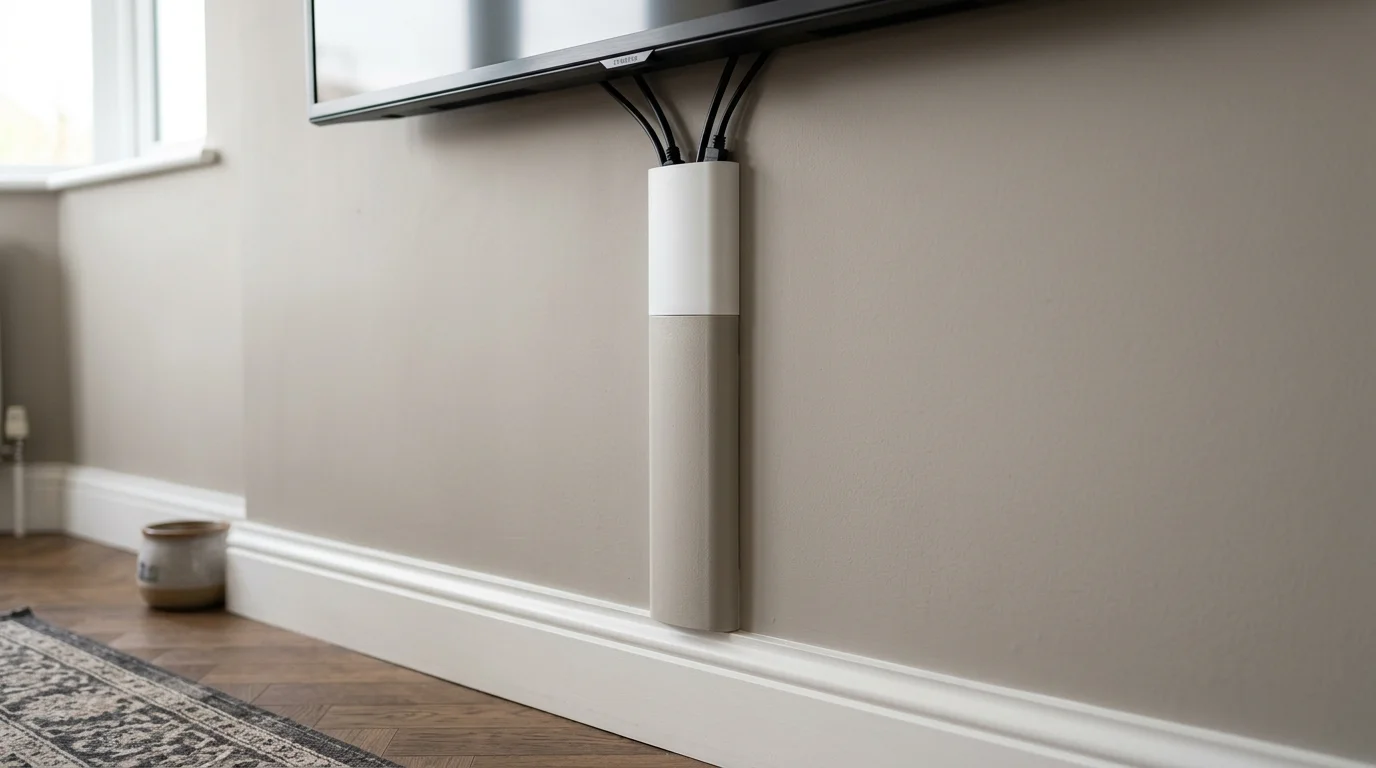
Forget ugly, square commercial plastic trunking. D-Line architectural trunking features a patented semi-circular curved profile that blends reliably into the wall:
- Corner Placement: Instead of dropping straight down the middle of the wall, route the trunking horizontally behind the TV and run it down the corner crease of an alcove or chimney breast where natural shadows hide the profile.
- Paint Matching: Lightly sand the PVC surface with 240-grit sandpaper and apply two coats of your exact wall emulsion. The trunking becomes virtually invisible.
- Click-Lock Hinged Lid: The one-piece design snaps open easily, allowing you to add or swap HDMI 2.1 cables whenever you upgrade gaming consoles.
2. Method 2: Internal Stud Cavity Drop with Brush Plates
5 Architectural Cable Concealment Methods: Zero-Plastering Decision Matrix
If your TV is mounted on a hollow timber stud wall or plasterboard partition, you already have an empty vertical cavity waiting to be used with zero plaster damage:
- Use a stud finder to locate the two vertical timber studs flanking the TV location.
- Cut a small single-gang rectangular opening in the plasterboard directly behind where the TV sits using a manual drywall pad saw.
- Cut an identical single-gang opening directly below at low level, behind your media console or sideboard.
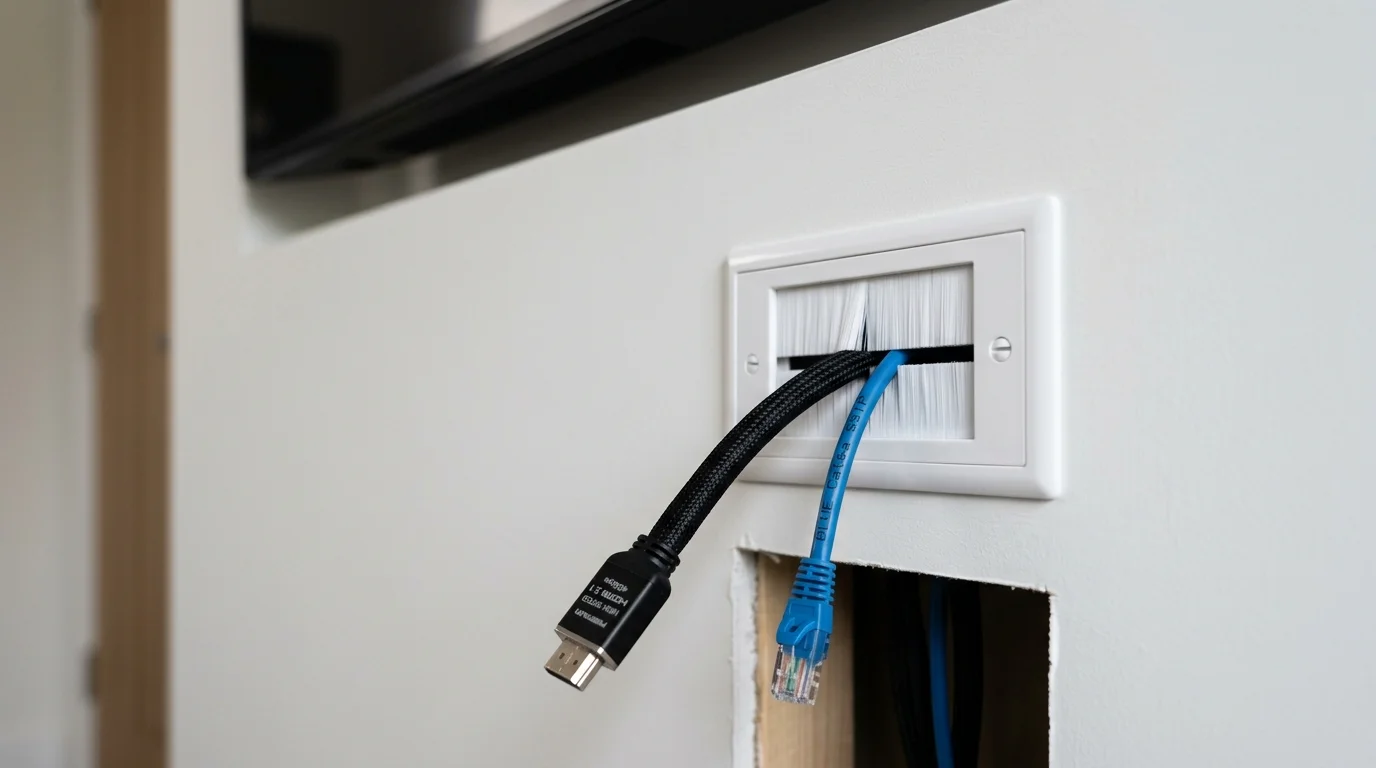
- Install two architectural nylon brush faceplates with drylining back boxes.
- Drop a flexible cable-pulling fish tape or weighted string down the cavity, hook your HDMI, optical, and aerial cables, and pull them through. The TV completely covers the top hole, and the media cabinet covers the bottom hole—leaving a 100% invisible finish with zero plaster repairs.
3. Method 3: Low-Profile Fabric Cable Sleeves
For rental properties or temporary bedrooms where adhesives cannot be applied to wallpaper, high-density woven fabric cable sleeves offer an attractive alternative:
- Self-Closing Neoprene or Braided Mesh: Wraps tightly around up to 6 cables, transforming a chaotic tangle of black and white wires into a single uniform, tailored cord.
- Colour Coordination: Available in crisp white, light grey, or matte black to match your skirting or feature wall palette.
4. Method 4: Behind-Skirting & Under-Carpet Edge Routing
Once cables reach the bottom of the wall, traversing the room to your router or AV cabinet should never involve trailing leads across open carpets:
- Skirting Board Rebates: Many modern skirting boards feature a hollow rear rebate or expansion channel along the bottom edge where thin Cat6 or flat HDMI cables can be tucked invisibly.
- Carpet Gripper Channels: In carpeted rooms, a natural 8mm gap exists between the wooden carpet gripper strip and the skirting board. Using a plastic bolster tool, cables can be pushed gently into this expansion gap without lifting carpet underlay.
Architectural Cable Concealment: Brush Plates vs D-Line Trunking
BLUF Direct Answer: Hiding TV cables without chasing masonry or replastering can be achieved through two non-invasive methods: cavity drop brush plates on stud/drywall partitions, or semi-circular paintable D-Line trunking that blends reliably with skirtings and wall paint on solid brickwork.
In rental properties, newly decorated living rooms, or solid stone homes where cutting deep plaster channels creates unacceptable mess and redecorating expense, non-destructive cable concealment is the optimal approach. On hollow stud or dot-and-dab walls, cutting two single-gang holes behind the TV and above the skirting allows cables to drop internally through the cavity.
On solid masonry where cavity drops are impossible, architectural self-adhesive D-Line trunking provides a neat solution. Its patented half-round curved profile eliminates industrial square conduit looks. When primed and painted with matching wall emulsion, it becomes virtually invisible.
| Concealment Method | Wall Substrate | Redecoration Required | Aesthetic Rating |
|---|---|---|---|
| Cavity Drop Brush Plates | Stud partition or Dot & Dab | Zero (Clean drywall cuts) | 10/10 (100% Invisible) |
| Paintable D-Line Half-Round | Solid brick, stone or plaster | Paint over trunking only | 8.5/10 (Architectural flush blend) |
| Chasing & Skimming (Traditional) | Solid masonry or blockwork | Full plaster skim & repainting | 10/10 (Permanent in-wall) |
TV Wall Mounting Bracket & Structural Anchor Selector
Identify the exact anchor specification, drill bit diameter, and bracket rating needed to safely suspend heavy OLED and LED screens up to 85″ with zero drywall pull-out risk.
How to Conceal TV Cables using Brush Faceplates
Step-by-step guide to installing in-cavity brush plates for zero visible cables.
Mark Upper & Lower Faceplate Cutouts
Trace single-gang dry lining boxes directly behind the TV screen and 300mm above floor level.
Cut Drywall Using Jab Saw
Cut along markings with a handheld drywall jab saw, avoiding vertical timber studs or cabling zones.
Drop Lead Weight or Magnetic Puller
Lower a weighted string or magnetic cable fish through the top hole down the cavity to the bottom aperture.
Pull HDMI & Power Cables and Snap Plates
Attach cables to draw wire, pull through cavity, and screw white or brushed chrome faceplates flush to the wall.
5. Method 5: Luxury Feature Media Slat Walls
The ultimate 2026 interior design trend is mounting your television against a modern acoustic timber slat feature wall (e.g. natural oak or walnut acoustic felt panels):
The 10mm recycled acoustic felt backing creates a natural hollow space between the timber slats. Cables, power leads, and LED lighting wiring can be routed freely behind the slats without any plaster chasing, while dramatically improving the acoustic clarity and warmth of your living room sound system.
Learn more about drywall fixings in our guide to TV mounting on dot and dab drywall, explore art frame routing in Samsung The Frame installation secrets, or book our professional TV wall mounting engineers across Yorkshire and Lancashire.