
When routing network data cabling between a house and an external CCTV camera, an outdoor Starlink dish, a perimeter security gate, or a detached garden studio, homeowners frequently ask: "Can I just clip a standard grey or purple Cat6 Ethernet cable along the exterior brickwork without putting it in plastic conduit?" The short answer is: not if it is indoor PVC or LSZH cable. Using standard indoor data cable externally is one of the most common causes of network failure in the UK. In this practical trade guide, lead cabling engineer Gary Pearce explains the chemical degradation caused by British weather and details the proper methods for running exterior network cables.
☀️ The Solar UV Degradation Timeline
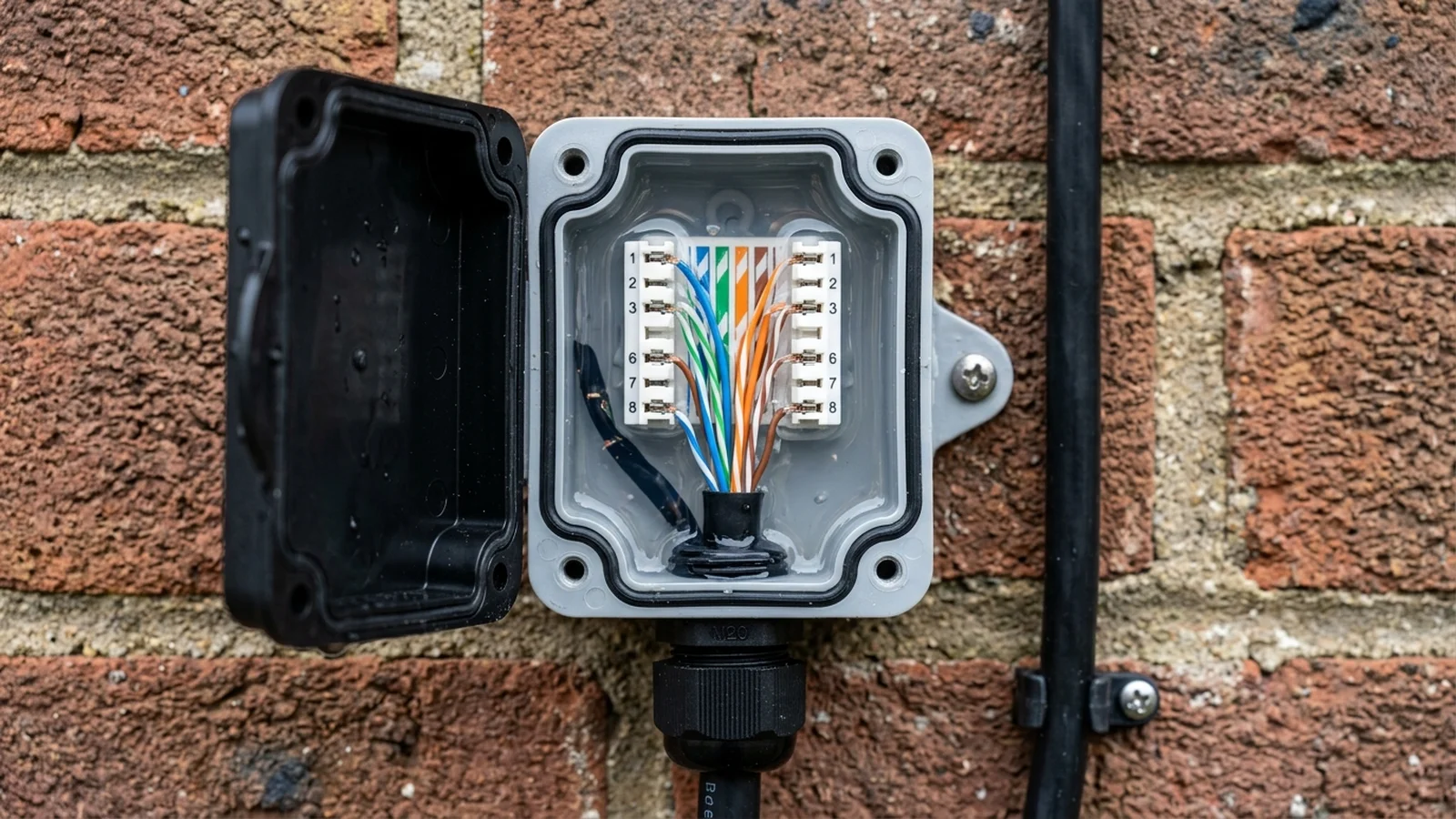
Standard indoor Ethernet cables feature a Polyvinyl Chloride (PVC) or Low Smoke Zero Halogen (LSZH) outer jacket. These chemical compounds contain zero UV-stabilizing additives. When exposed to outdoor sunlight, ultraviolet photons break down the polymer chains. Within 12 to 18 months, the cable jacket becomes chalky, brittle, and micro-cracked. Rainwater penetrates the cracks, soaking the internal copper twisted pairs and causing catastrophic packet loss and short circuits.
1. Exterior Grade Cable Jacket Materials: PE vs PVC vs SWA
If you want to run cable externally without protective conduit, you must specify the correct jacket chemistry:
| Cable Type | Outer Jacket | Surface External Wall | Direct Underground Burial |
|---|---|---|---|
| Standard Indoor Cat6 | Indoor PVC / LSZH | PROHIBITED (Fails in 12–18 mo) | PROHIBITED (Immediate failure) |
| External Grade Cat6 | Black UV-Rated Polyethylene (PE) | APPROVED (15+ Year Life) | Only inside ducting / conduit |
| Steel Wire Armoured (SWA) | Galvanised Steel Wire Braid + PE | High-Impact Industrial Zones | APPROVED (Direct Burial 450mm) |
2. When Is Conduit Mandatory?
Exterior Cable Jacket Durability: Indoor PVC vs UV-Rated PE vs Armoured SWA
While black UV-rated PE cable can be clipped directly to high-level brickwork, protective conduit is mandatory in three key scenarios:
- Low-Level Mechanical Protection: Any cable running within 2 metres of the ground along an alleyway, driveway, or garden path must be enclosed in high-impact black PVC or galvanised steel conduit to prevent damage from wheelbarrows, lawnmowers, ladders, and vandalism.
- Subterranean Garden Runs (Non-Armoured): If you bury unarmoured Cat6 in the ground without conduit, garden mice, rats, and plant roots will gnaw through the jacket in months. Use 20mm or 25mm rigid twin-wall underground ducting.
- Crossing Roof Valleys: Never allow cable to rest unprotected in roof valleys or gutters where standing water and moss accumulate.
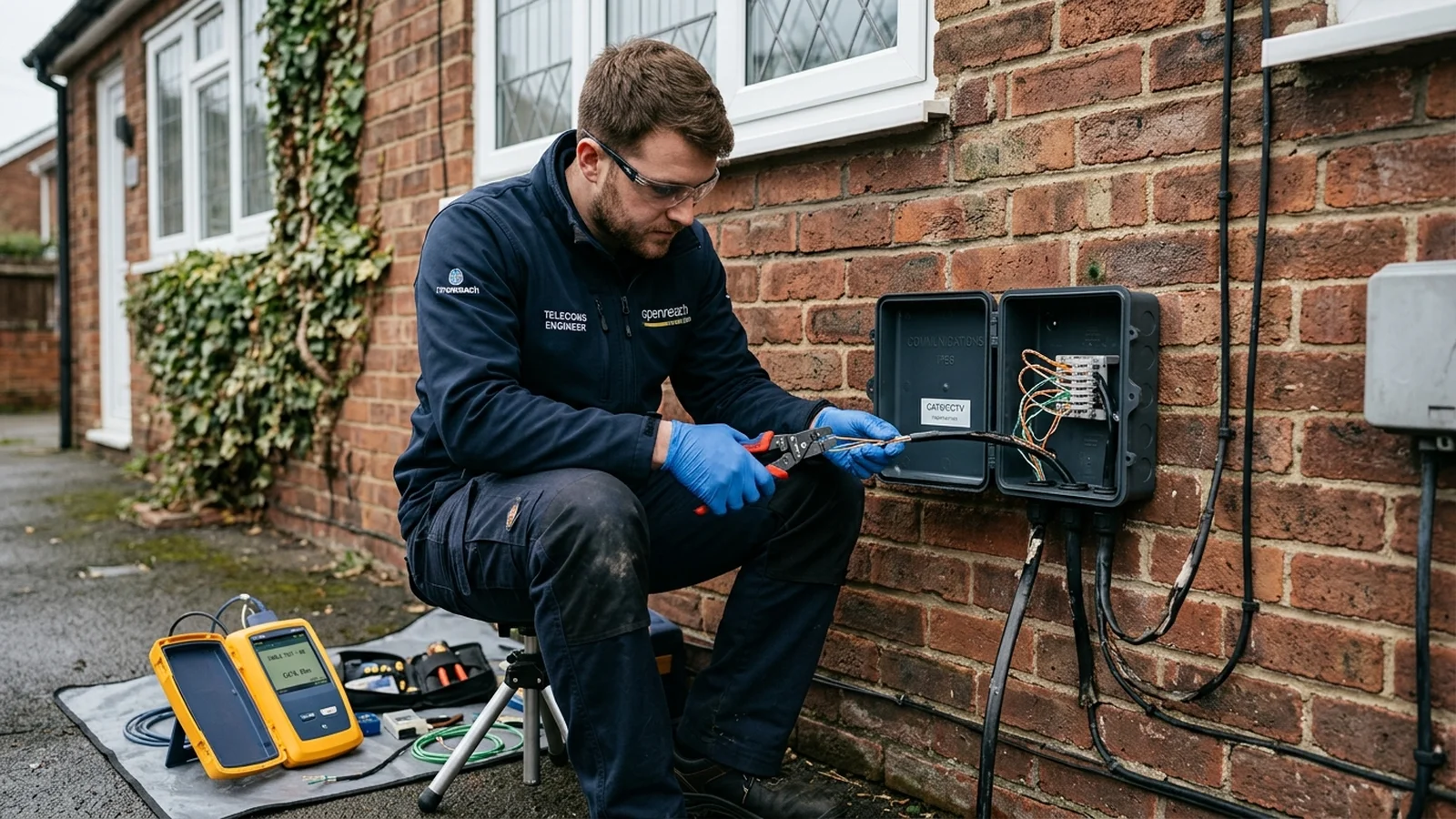
UV Degradation, PE Sheaths & Steel Wire Armour (SWA)
BLUF Direct Answer: Standard indoor PVC Cat6 cable must never be run outside without conduit because solar UV radiation causes the jacket to crack within 18 months. Exterior runs require heavy-duty UV-stabilized Black Polyethylene (PE) cable, or Steel Wire Armoured (SWA) Cat6 for direct burial without conduit.
Indoor Cat6 cables use a soft polyvinyl chloride (PVC) outer jacket designed for fire resistance in wall voids. However, PVC contains plasticizers that break down when exposed to ultraviolet light and winter frost. Within two summers, the jacket becomes brittle and develops microscopic fissures, allowing rainwater to penetrate the internal twisted pairs.
For outdoor wall runs clipped along brickwork or under fascias, UV-rated Black PE (Polyethylene) cable is the minimum industry standard. For running underground across gardens, Steel Wire Armoured (SWA) Cat6 incorporates a layer of galvanized steel wire braid beneath an outer waterproof sheath, protecting the cable against garden spade punctures, ground compaction, and burrowing rodents without needing separate plastic ducting.
| Cable Type | Outer Sheath Material | Direct Burial Safe? | Outdoor Expected Lifespan |
|---|---|---|---|
| Standard Indoor Cat6 | Soft PVC / LSOH | NO (Requires rigid conduit) | 1 - 2 Years (Cracks under UV) |
| External UV-Rated Cat6 | Black Polyethylene (PE) | Surface clip only (Conduit in ground) | 15+ Years on exterior walls |
| Steel Wire Armoured Cat6 (SWA) | Galvanized Steel Braid + PE Sheath | YES (Direct burial at 450mm) | 25+ Years (Spade & rodent proof) |
Garden Office & Outbuilding Broadband Method Decider
Find the optimal transmission medium between your main home and garden studio based on trenching practicality, line of sight, electrical earthing zones, and distance.
How to Run Data Cable Outside Safely and Permanently
Checklist for installing external and direct burial network cabling.
Choose Black UV-Rated PE or Armoured SWA
Never install white, grey, or purple indoor PVC cables outside in sunlight.
Clip with Black UV-Resistant Cable Cleats
Fasten cables along mortar lines every 400mm using UV-stabilized masonry pin clips.
Maintain 50mm Separation from Mains Cables
Keep data cables separated from 230V mains power cables to comply with BS 7671 electrical separation.
Form Downward Drip Loop at Wall Penetration
Ensure external cable slopes downwards before entering building wall, sealed with waterproof silicone.
3. Professional External Clipping Technique
To maintain clean architectural curb appeal across Yorkshire and Lancashire properties:
- Mortar Line Anchoring: Always pin clips into the horizontal mortar joints rather than the face of the brick. This prevents damaging the face of heritage brickwork and ensures neat, laser-straight horizontal runs.
- Spacing: Space black UV-stabilised masonry clips every 300mm to 350mm horizontally, and every 400mm vertically. Taut clipping prevents wind flutter that fatigues the copper core over time.
- Drip Loops: Always form a 100mm U-bend loop below the point of masonry entry to shed rainwater, as explained in our Starlink cable routing and grommet guide.
To connect outbuildings, see our garden office Wi-Fi guide. Learn about cable specifications in Cat6 vs Cat6A data cabling, or explore our exterior cable repair and professional data cabling services and professional home Wi-Fi installation.