

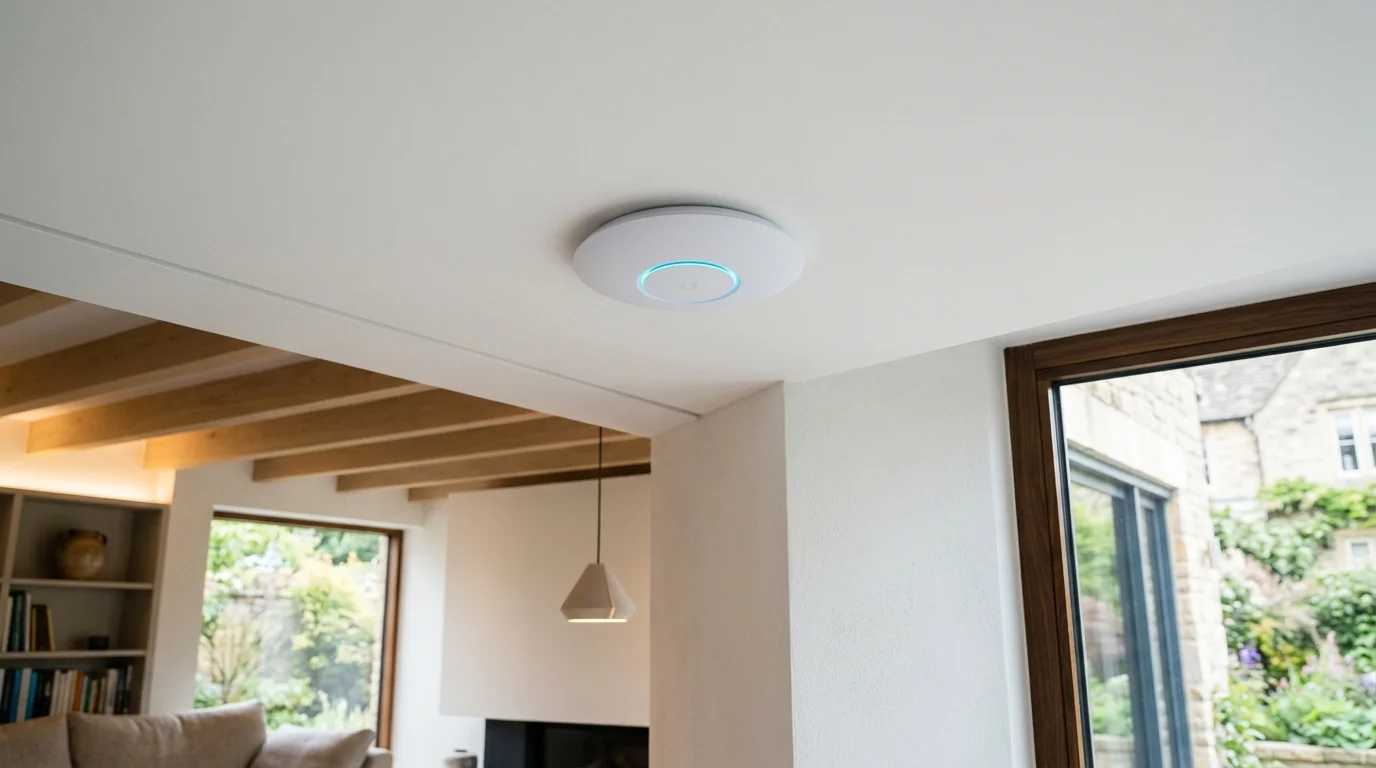
In modern smart home engineering, Power over Ethernet (PoE) is one of the most transformative technologies available. By delivering both high-speed gigabit data and low-voltage Direct Current (DC) electrical power over a single Category 6 network cable, PoE completely eliminates the need to hire electricians to install unsightly 230V mains power sockets near security cameras, ceiling Wi-Fi access points, wall-mounted tablets, or smart doorbells. However, deploying PoE incorrectly—mismatched wattage standards, exceeding switch power budgets, or using cheap inferior cabling—can cause continuous device reboots and thermal instability. In this comprehensive technical guide, certified systems engineer Gary Pearce explains the IEEE PoE standards and how to architect a rock-solid home PoE network.
⚡ The Three IEEE PoE Standards Explained
1. Calculating Your Switch Power Budget
The number one reason for mysterious camera dropouts is exceeding the total PoE Power Budget of the central network switch:
- Rated Switch Capacity: An 8-port PoE switch might provide eight physical RJ45 ports, but carry a total power supply rating of only 65 Watts.
- Peak Night-Time Consumption: During daylight, four 4K ColorVu security cameras might consume just 4 watts each (16W total). However, at sunset, when built-in supplemental white LEDs and optical heating elements activate, power draw spikes to 12 watts per camera (48W). If you also connect a Wi-Fi 6 access point drawing 18 watts, total consumption reaches 66W, exceeding the switch capacity and causing the switch to shut down ports in an emergency loop.
- The 20% Headroom Rule: Always select a PoE switch whose power budget exceeds your calculated maximum connected load by at least 20%.
2. Copper Quality Physics: Why Solid Copper is Mandatory
IEEE PoE Standards Comparison: Voltage, Wattage & Supported Smart Devices
Delivering 48 Volts of DC power over thin twisted copper wire introduces electrical resistance:
- Avoid CCA (Copper Clad Aluminium): As detailed in our guide to Cat6 vs Cat6A data cabling, aluminium has 55% higher electrical resistance than pure copper. Running PoE over CCA causes substantial voltage drops over runs longer than 15 metres, overheating cable bundles and starving devices of operating current.
- Specify 23AWG or 24AWG Solid Copper: Thicker 23AWG conductors dissipate thermal heat effectively, fully supporting high-power 802.3bt standards without packet degradation.
PoE Standards: 802.3af vs 802.3at (PoE+) vs 802.3bt (PoE++)
BLUF Direct Answer: Power over Ethernet injects 48V DC power down spare twisted copper pairs in Cat6 cable, allowing CCTV cameras, Wi-Fi access points, and VoIP phones to operate over runs up to 100 metres without needing localized 230V mains plug sockets.
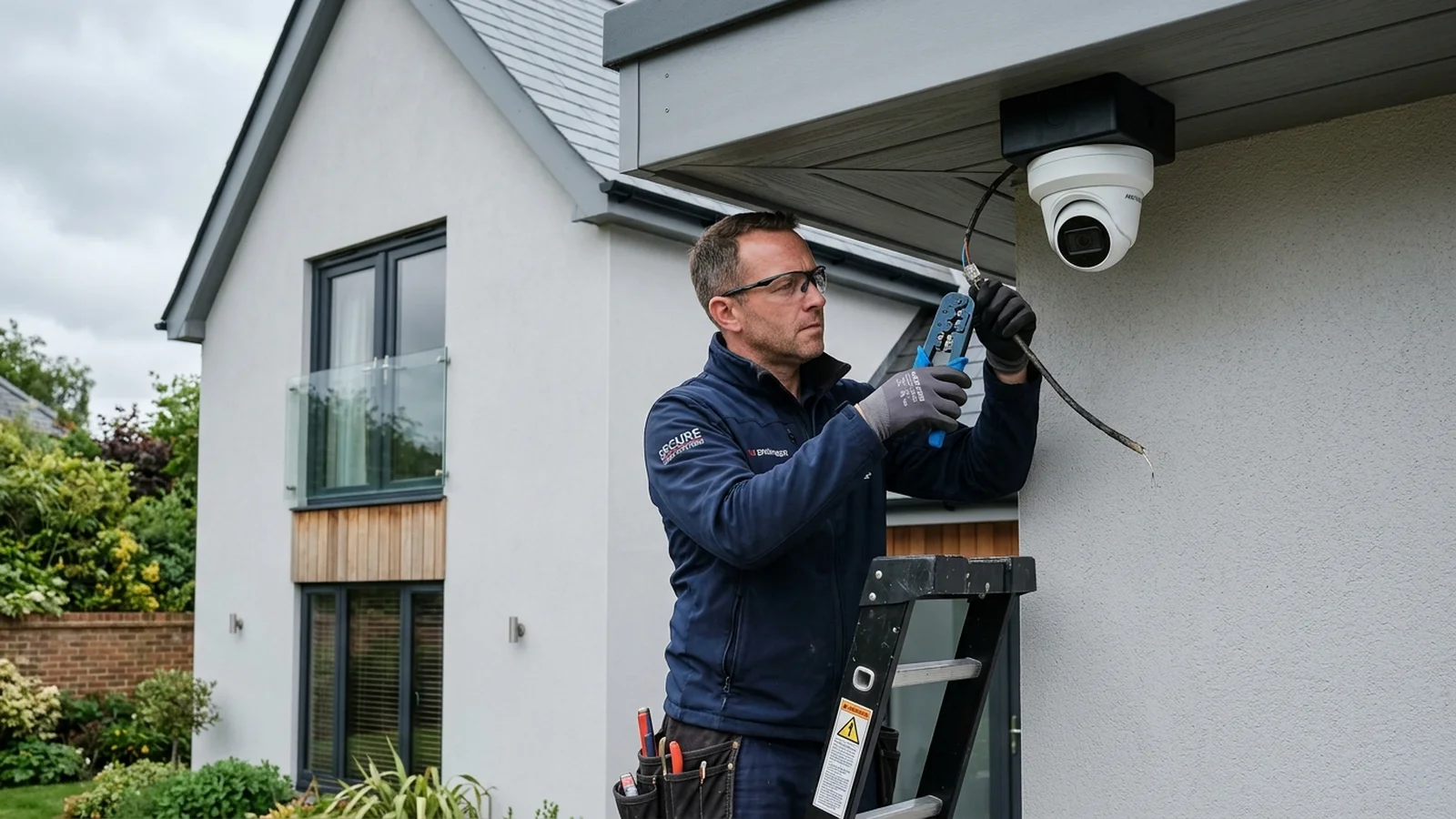
Power over Ethernet (PoE) revolutionizes smart home installations by combining data communication and high-efficiency low-voltage power into a single RJ45 cable. Instead of hiring an electrician to install spur sockets near roof soffits for CCTV or ceilings for Wi-Fi access points, a centralized PoE switch located in a utility cupboard powers all devices safely.
However, understanding PoE wattage budgets is critical. Standard PoE (802.3af) delivers up to 15.4W—ideal for basic IP cameras. PoE+ (802.3at) supplies up to 30W, which is required for Wi-Fi 6/7 access points and cameras with active sirens or PTZ motors. PoE++ (802.3bt) delivers 60W to 90W, capable of powering smart LED lighting and video conference displays.
| PoE Standard | IEEE Classification | Max Wattage at Port | Typical Device Application |
|---|---|---|---|
| PoE (Standard) | IEEE 802.3af | 15.4 Watts | Fixed IP cameras, VoIP desk phones, smart door sensors |
| PoE+ (High Power) | IEEE 802.3at | 30.0 Watts | Wi-Fi 6/7 Access Points, PTZ speed dome cameras, video doorbells |
| PoE++ (Ultra Power) | IEEE 802.3bt (Type 3/4) | 60W - 90W | Motorized long-range cameras, point-to-point dishes, IoT lighting |
Garden Office & Outbuilding Broadband Method Decider
Find the optimal transmission medium between your main home and garden studio based on trenching practicality, line of sight, electrical earthing zones, and distance.
How to Calculate and Deploy a Home PoE Switch Budget
Planning protocol for centralized PoE network switches.
Audit Total Device Wattage Requirements
List all PoE equipment (e.g. 4x 8W cameras + 2x 18W access points = 68W total demand).
Select Switch with 30% Headroom
Choose a managed switch providing at least 100W total PoE budget to prevent port shutdowns during peak IR night loading.
Use Solid Copper Cat6 (Never CCA)
Ensure data cabling uses 100% bare solid copper cores; cheap Copper Clad Aluminium (CCA) causes dangerous voltage drops and fire hazards.
Label Ports on Front Patch Panel
Neatly number patch cords connecting from NVR and access point drops into dedicated PoE switch ports.
3. Active vs Passive PoE: The 24V Danger Zone
Understanding the difference between active and passive PoE is critical to avoid destroying expensive equipment:
- Active PoE (IEEE 802.3af/at/bt): Intelligent and 100% safe. Before sending electrical power, the switch performs an electronic handshake with the connected device to confirm its exact voltage and wattage requirements. If you plug in a standard laptop, the switch sends zero power, functioning as a normal data port.
- Passive PoE (Typically 24V): Delivers continuous, unregulated voltage across specific pins with zero handshake. Plugging a non-PoE laptop or smart TV into a passive 24V port can instantly fry the device's ethernet network card.
To see PoE deployed in surveillance, consult our 2026 CCTV installation cost guide. For doorbell applications, see best smart video doorbells UK. To architect a commercial-grade home network, explore our structured data cabling services and professional home Wi-Fi installation across Yorkshire and Lancashire.