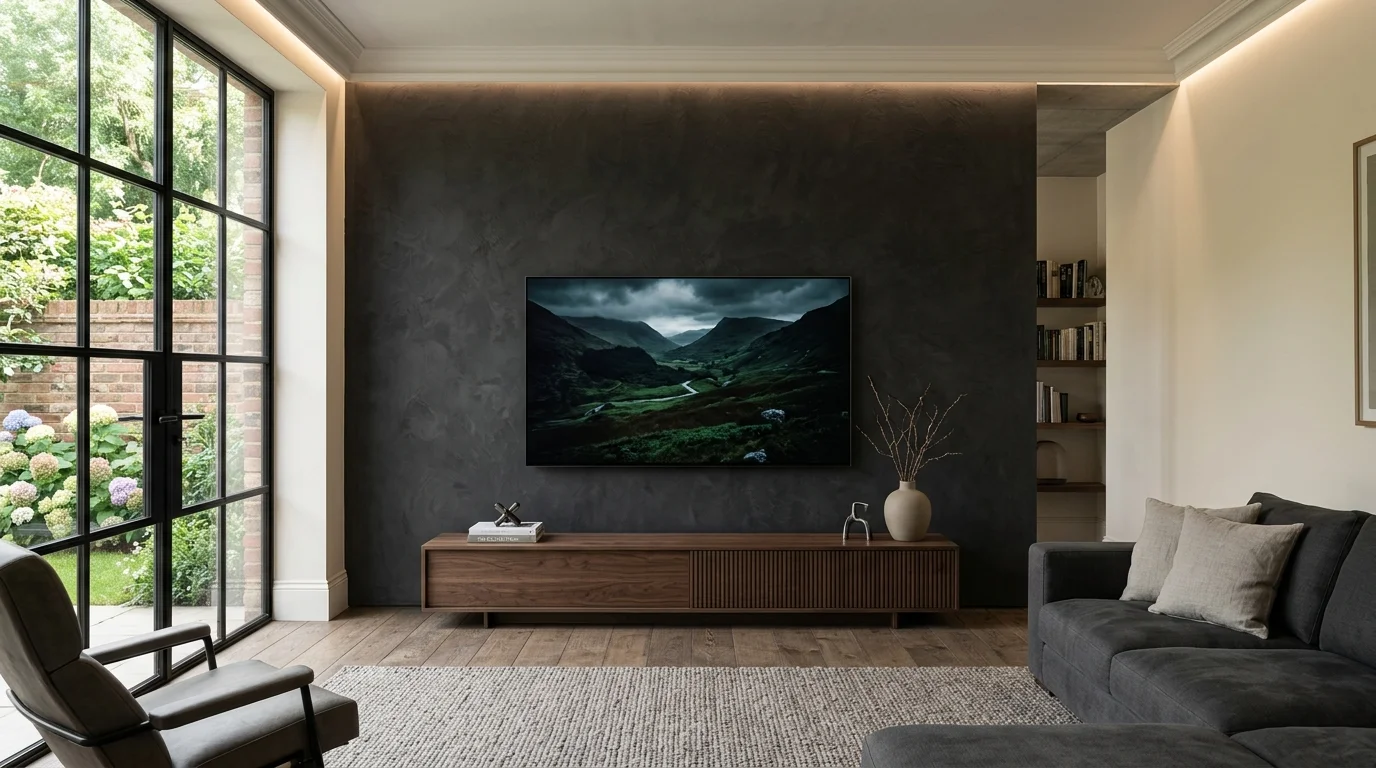
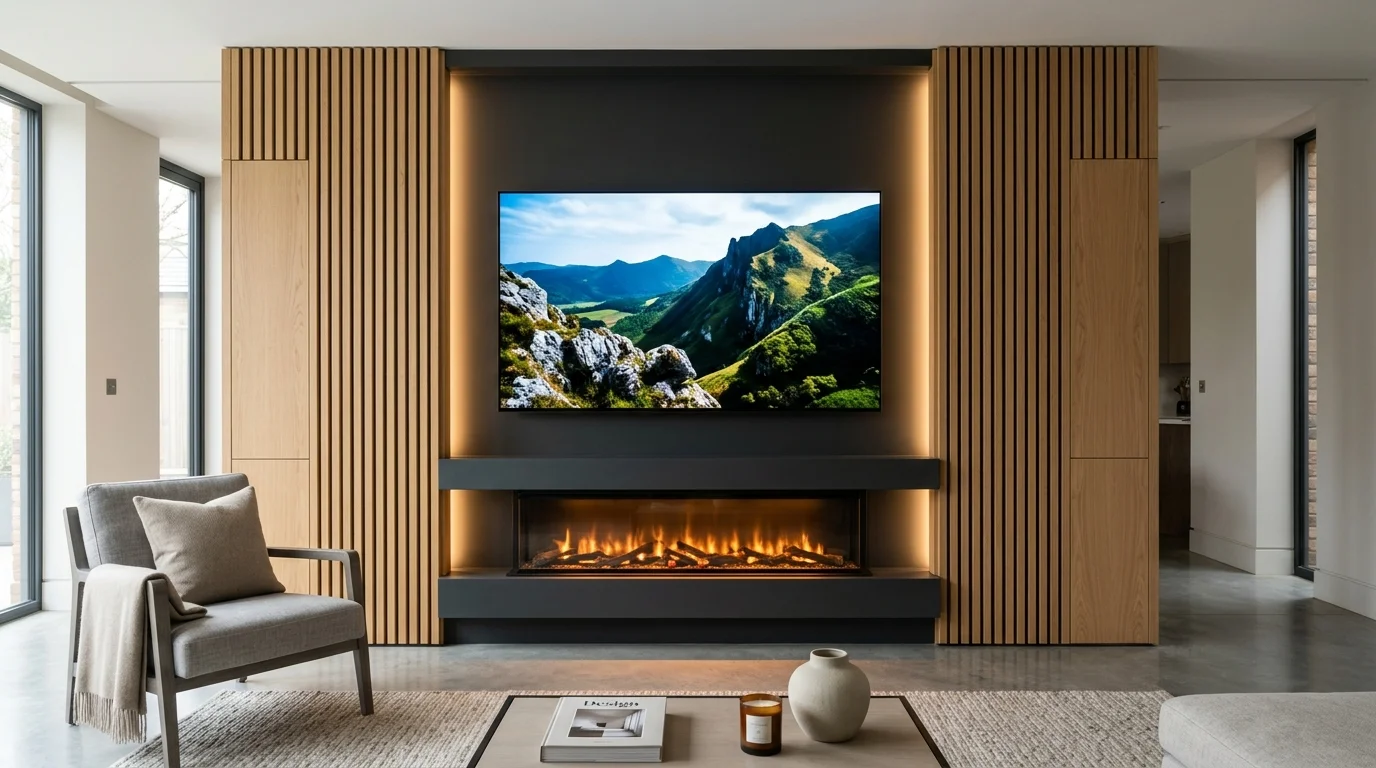
Mounting a large flat-screen television above a fireplace or chimney breast is one of the most desirable interior design choices for UK living rooms, creating a unified central focal point. However, from an engineering and electronics perspective, it is fraught with potential hazards: intense convective heat plumes from log burners that can cook sensitive display capacitors, severe ergonomic neck strain from high viewing angles, and crumbling Victorian lime mortar on historic brick stacks. In this comprehensive guide, lead systems engineer Gary Pearce details how to safely mount a TV above a fireplace without damaging your display or compromising home safety.
🔥 The 38°C Thermal Danger Zone
The internal temperature of consumer televisions (including OLED, QLED, and LED LCDs) must never exceed 38°C (100°F) during operation. Log-burning stoves and open gas fires can generate surface temperatures exceeding 70°C directly above the firebox. Exposing a television to this thermal plume leads to panel delamination, degraded organic compounds, capacitor bulging, and immediate invalidation of manufacturer warranties.
1. Heat Deflection Engineering: Mantels & Thermal Testing
If you have an active open fireplace or multi-fuel stove, you must deploy an engineered heat diversion barrier before mounting a television:
- Floating Mantel Shelf: Installing a non-combustible floating wooden or stone mantel shelf protruding at least 150mm to 200mm outward from the chimney breast acts as an aerodynamic air foil, redirecting rising hot convective air currents away from the TV face.
- The 1-Hour Thermometer Test: Before drilling, light your fire at normal maximum output for one hour. Place a digital thermometer flat against the chimney breast where the bottom bezel of the TV will sit. If the temperature reads above 35°C, you must either increase mantel depth or install a heat-deflection shield.
- Electric Fireplaces: Modern flame-effect electric fires typically feature front-firing heat blowers directed towards the floor, making them substantially safer for TV mounting than solid-fuel stoves.
2. Solving Ergonomic Neck Strain: Drop-Down Mantel Mounts
Thermal Plume Convection & Floating Mantel Deflection Architecture
Convective heat plumes from log burners hit 65°C directly against the TV bezel, causing capacitor swelling, organic panel degradation, and warranty voidance.
Mantel acts as an aerodynamic heat foil, pushing rising thermal currents outward into the room and keeping the TV operating comfortably under 32°C.
The ideal ergonomic viewing position for a television is having the middle third of the screen at eye level when seated on a sofa (typically 95cm to 105cm from the floor). Above a traditional fireplace, the screen is often forced up to 140cm–160cm high, forcing viewers to tilt their heads back at unnatural 30-degree angles:
Tilting Low-Profile Mount
A heavy-duty tilting bracket angles the TV downwards by 10 to 15 degrees. While this corrects colour contrast shifts on VA panel screens, it does not lower the physical height of the screen.
Best for: Casual viewing & clean aestheticsDynamic Pull-Down MantelMount
Using counterbalanced automotive gas struts, a pull-down mount allows you to effortlessly pull the TV out and down by 60cm to 75cm, placing the screen at perfect seated eye level directly in front of the fireplace hearth.
Best for: Long movie sessions & gaming3. Masonry Anchoring into Victorian Chimney Breasts
Drilling into chimney breasts across older properties in Yorkshire and Lancashire presents tricky masonry challenges:
- Avoid Crumbling Lime Mortar: Victorian brickwork often uses soft lime mortar. Never drill anchor holes directly into mortar joints. Always use a carbide 4-cutter drill bit to anchor directly into the solid red brick or gritstone core.
- Flue Clearance Depth: The front brick skin of a typical UK chimney breast is 102mm (one brick thick). Anchor bolts must penetrate 60mm to 70mm for maximum shear strength, but must never punch through into an active working flue where smoke or carbon monoxide could escape.
- Chemical Resin Studding: For soft heritage bricks or heavy 75-inch+ screens, we inject structural vinylester chemical resin studs that bond permanently with the brickwork, providing unbreakable holding power.
Thermal Flue Safety, Viewing Angles & Mantle Deflection Shields
BLUF Direct Answer: Installing a TV above an active fireplace requires verifying that chimney breast surface temperatures remain below 35°C, fitting a heat-deflecting mantle shelf, and installing a downward-tilting or pull-down articulating bracket to prevent neck strain and internal LCD component degradation.
Operating a wood-burning stove or high-output gas fire can drive chimney breast surface temperatures above 50°C. Long-term heat exposure dries out internal LCD panel adhesives, warps diffuser sheets, and triggers premature capacitor failure inside TV power supply boards.
ADI Communications conducts a digital laser infrared pyrometer survey of the chimney breast under full fire operation before drilling. We ensure a non-combustible mantle shelf extends at least 150mm beyond the fireplace opening to deflect rising convective heat plumes. In historic properties, we drill directly into stone or brick using M8 steel expansion shield anchors, never relying on soft lime mortar joints.
| Fireplace Type | Surface Temp at 1.2m | Mantle Deflector Requirement | TV Safety Status |
|---|---|---|---|
| Electric Fire / Flame Effect | 20°C - 26°C | Optional (Cosmetic only) | 100% Safe (Zero heat rise) |
| Closed Wood-Burning Stove (5kW) | 35°C - 48°C | Mandatory (150mm depth) | Safe with heat shield & tilt bracket |
| Open Hearth Coal / Gas Grate | 55°C+ (Excessive) | Mandatory Deep Stone Mantle | High Risk without deflector |
TV Wall Mounting Bracket & Structural Anchor Selector
Identify the exact anchor specification, drill bit diameter, and bracket rating needed to safely suspend heavy OLED and LED screens up to 85″ with zero drywall pull-out risk.
How to Safely Mount a TV Above a Working Fireplace
Thermal testing and installation checklist for fireplace chimney breast TV mounting.
Run Fireplace at Full Output for 2 Hours
Light the fire and measure wall temperature at the intended TV height with an infrared thermometer to confirm under 38°C.
Verify Mantle Heat Shield Projection
Ensure a solid oak, stone, or metal mantle extends at least 150mm forward to deflect rising convection heat plumes.
Select 12-Degree Tilt or Pull-Down Mount
Install a forward-tilting bracket to align the screen perpendicularly with seated eye line at 1.0m to 1.2m floor height.
Route Heat-Shielded In-Wall Cables
Encase HDMI 2.1 and power cables inside fire-retardant metal or rigid PVC conduit chased into masonry or false chimney breast.
4. Cable Concealment on Solid Masonry
Because solid chimney breasts have no hollow cavity, hiding wires requires trade skill:
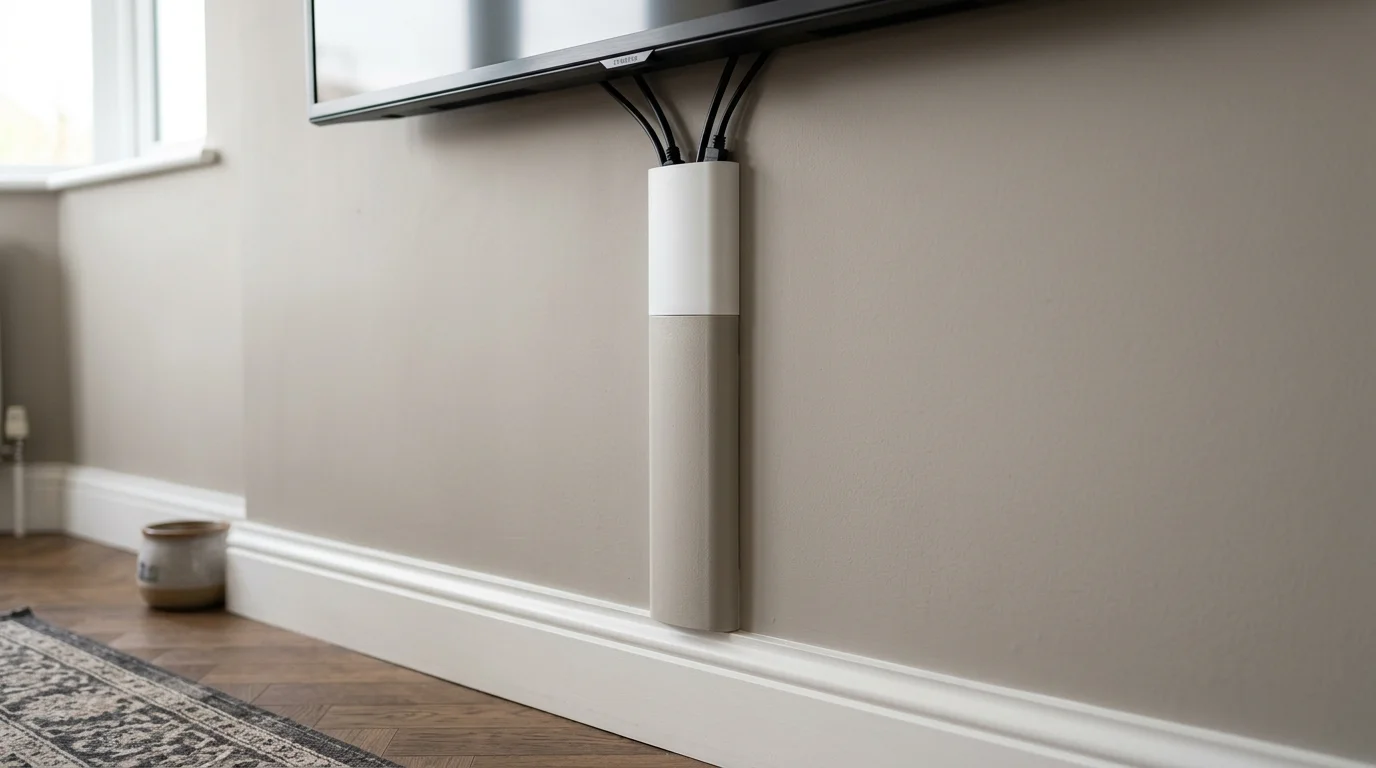
- Architectural D-Line Quadrant Trunking: Painted to match the exact wall colour, neat trunking runs down the corner of the chimney breast where it blends into the shadow line.
- Recessed Chasing: Cutting a 30mm vertical channel into the masonry with an SDS chaser, installing oval PVC conduit, and plastering flush.
- False Stud Chimney Breast: Building a lightweight 75mm timber stud framework over the chimney breast to create a luxury false media wall with integrated soundbar and ambient LED niches.
For more advice on cable routing, see how to hide TV cables without chasing. If you have dot and dab drywall, review our guide to TV mounting on dot and dab drywall. To book a professional survey, explore our professional TV wall mounting services today.