
Every UK CCTV owner knows the dreaded 3:00 AM scenario: your smartphone buzzes relentlessly with dozens of urgent security notifications, jolting you awake, only to reveal an enormous, ghostly spider spinning a web directly across the camera lens. Spider webs are the single leading cause of nuisance false alarms on residential surveillance systems across Britain. In this practical engineering guide, lead security installer Gary Pearce explains the biological reasons why spiders gravitate toward CCTV cameras, and details 5 proven trade solutions to eliminate spider webs permanently without damaging your optical lenses.
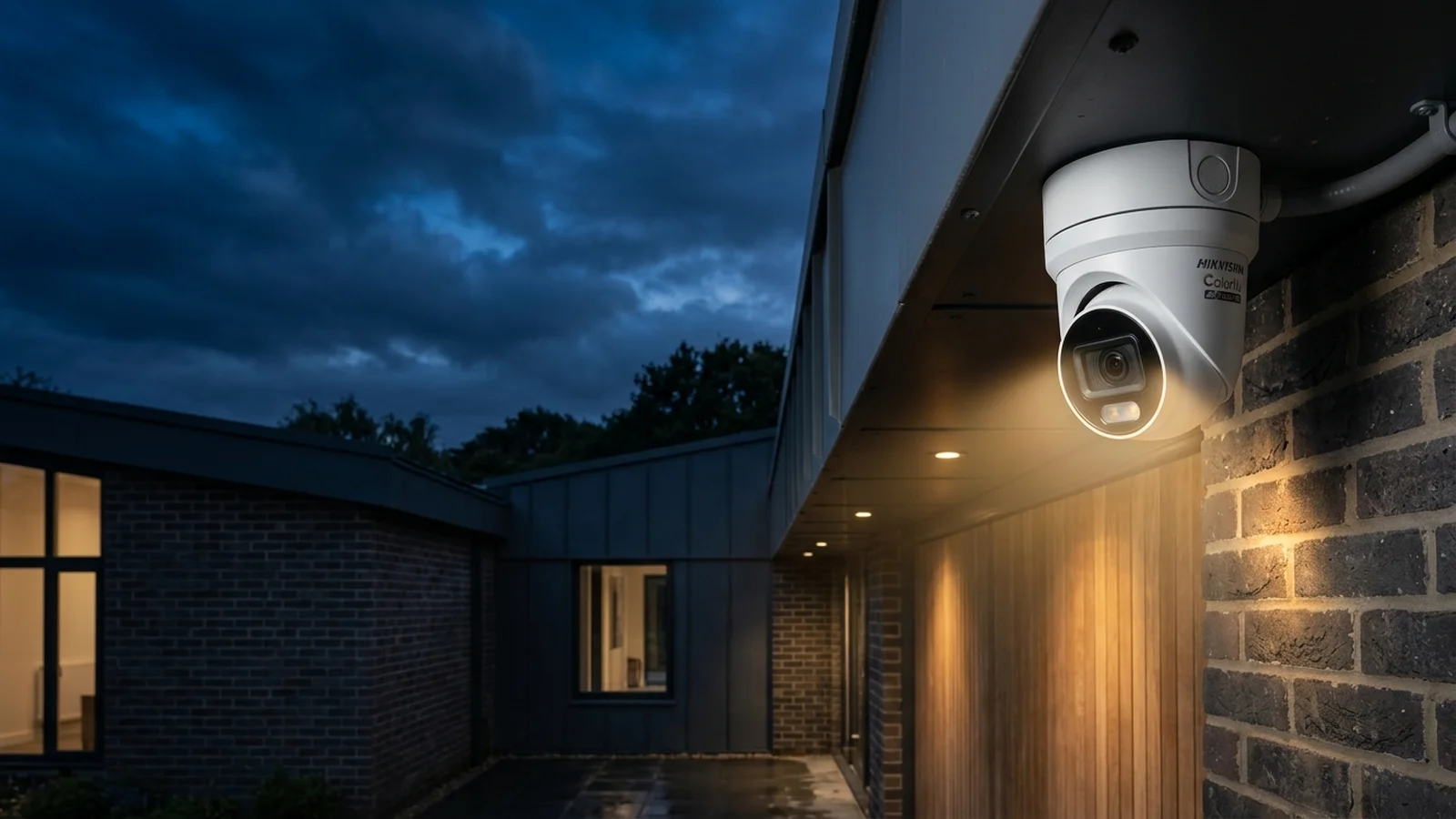
🕷️ The Infrared Heat Lamp Trap
Spiders don't care about your cameras—they care about dinner. Traditional CCTV cameras utilize a ring of high-power 850nm Infrared (IR) LEDs for night vision. These LEDs emit gentle, continuous thermal warmth. Attracted by the warmth, flying gnats, midges, and moths swarm the camera. Spiders quickly recognize this as a heated, 24/7 all-you-can-eat buffet and construct dense webs directly across the front glass to harvest trapped insects.
1. Solution 1: Upgrade to 24/7 Full-Colour Optical Tech (ColorVu / TiOC)
The ultimate permanent cure for spider webs is eliminating the infrared heat source entirely:
- No Infrared Glow: Next-generation cameras, as reviewed in our Hikvision ColorVu vs Dahua TiOC comparison, use massive F1.0 apertures to record in full colour at night without emitting continuous infrared heat.
- 90% Reduction in Web Building: Because there is no glowing IR heat lamp attracting flying insects, spiders build their webs elsewhere in the garden, completely freeing your camera lens from nocturnal obstructions.
2. Solution 2: Enable Deep Learning AI Target Classification
Why Spiders Target Traditional CCTV: The Infrared Heat Lamp Trap
Continuous 850nm IR LEDs radiate thermal warmth. Flying midges and moths swarm the light; spiders build webs directly across the warm glass to catch them.
No IR heat emission. Lens remains at ambient outdoor temperature with zero insect attraction, cutting nocturnal spider webs by over 90%.
Older cameras trigger motion alarms using simple pixel-change detection. When an out-of-focus spider web strand reflects light in front of the lens, millions of pixels change brightness, triggering an alarm:
- AcuSense / SMD 4.0 Filtering: Modern NVRs utilize deep-learning artificial intelligence to analyze target shapes. The system ignores spider webs, rain drops, and moths, sounding the alarm exclusively when a human body or moving vehicle enters the frame.
- Sleep Soundly: Even if a spider constructs a web across the lens, you will never receive a midnight phone alert unless an actual intruder steps onto your property.
3. Solution 3: Commercial Silicone & Teflon Barrier Sprays
If you have existing infrared cameras that you cannot replace immediately, apply a specialised non-stick barrier:
- Cover the camera optical glass lens with a piece of cardboard or painter's tape.
- Spray the outer plastic/metal camera housing, soffit bracket, and junction box with a high-grade silicone lubricant spray or dry PTFE (Teflon) spray.
- The slippery silicone coating prevents spiders' silk spinnerets from anchoring onto the smooth metal housing. The silk cannot adhere, forcing the spider to abandon the web. Reapply every 3 months.
4. Solution 4: Peppermint Essential Oil Natural Deterrent
Spiders possess sensitive olfaction organs on their legs and intensely dislike strong natural aromatic compounds:
- Mix 15 drops of pure peppermint essential oil with 200ml of warm water in a spray bottle.
- Wipe down the wall, soffit, and camera body (avoiding the optical glass) every six weeks during late summer and autumn breeding season.
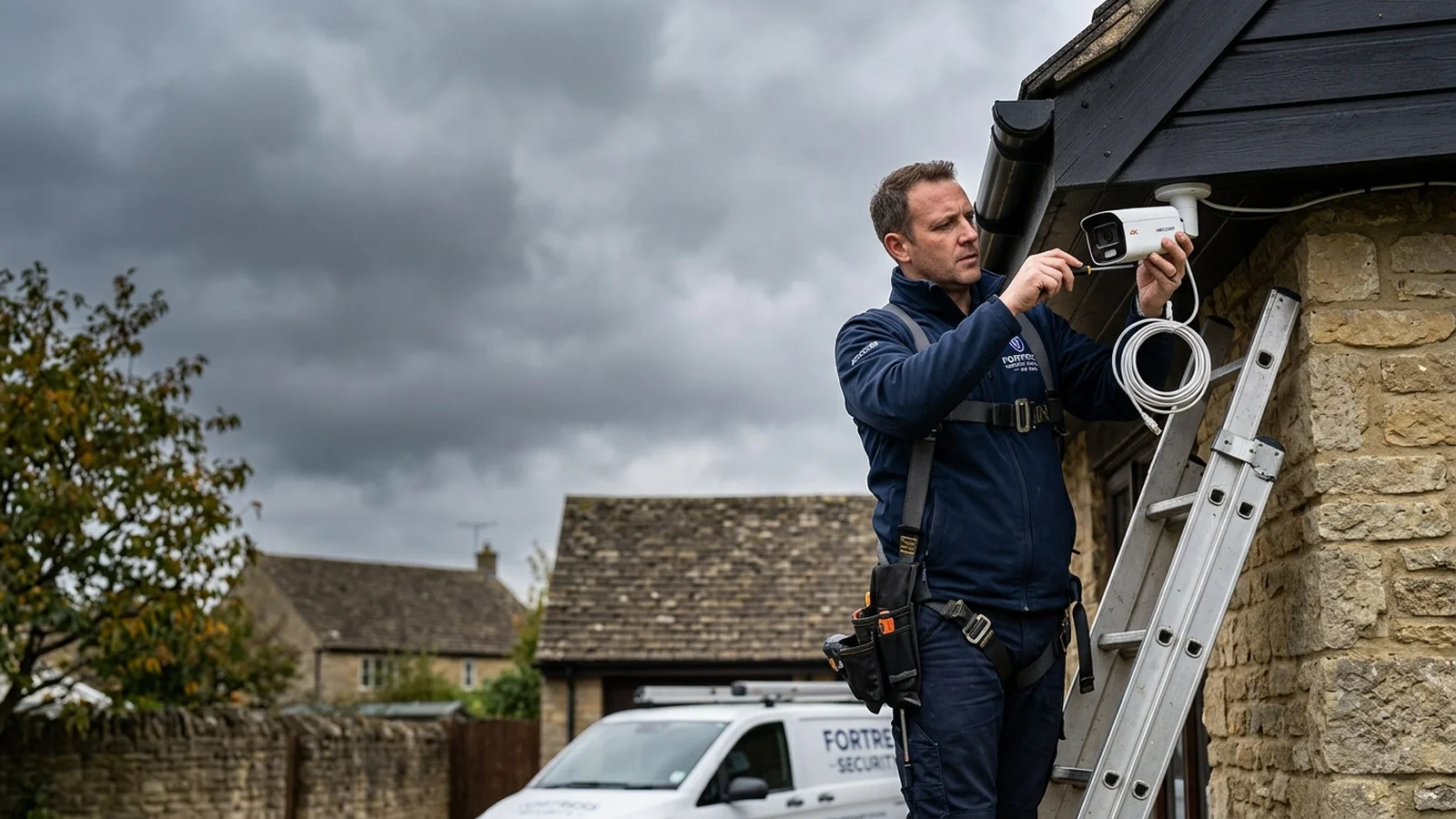
Optical Maintenance, Insect Repellent & AcuSense AI Filtering
BLUF Direct Answer: Traditional infrared CCTV cameras emit warm 850nm LED glow that attracts nocturnal insects and spiders who spin webs over the lens, triggering endless false alarm alerts. Upgrading to AcuSense AI human/vehicle filtering and silicone hydrophobic sprays eliminates 99% of web interference.
Spiders are naturally attracted to the gentle warmth produced by infrared (IR) LED rings. When a spider constructs a web across the glass, the intense night IR light reflects directly back into the sensor, washing out the image and creating constant pixel-change motion alerts on older NVRs.
The solution is twofold: First, modern AcuSense deep-learning AI completely ignores spiders, moths, rain, and moving tree branches because it only triggers alerts when a true human skeleton or vehicle chassis geometry is identified. Second, treating the camera turret casing with anti-spider barrier sprays and relocating supplemental warm white lighting 1 metre away prevents insects from ever reaching the glass lens.
| Method | Effectiveness | Maintenance Interval | How it Works |
|---|---|---|---|
| AcuSense Deep Learning AI | 99.8% False Alarm Reduction | Permanent (Firmware algorithm) | Filters out spider webs; only alerts on humans & cars |
| Silicone / Permethrin Spray | High (Stops web adhesion) | Reapply every 3 - 6 months | Makes camera housing too slick for spiders to anchor silk |
| Disable Onboard IR (External Light) | High (Removes heat attractor) | One-time setup | Turns off lens heat source; relies on PIR dusk light |
CCTV Storage Capacity & Uplink Bandwidth Calculator
Calculate the exact hard drive capacity required for 24/7 continuous local recording before loop overwrite, based on camera count, resolution, and H.265+ compression efficiency.
How to Stop Spiders and False Alarms on CCTV Cameras
Step-by-step maintenance and AI configuration guide.
Clean Lens with Optical Microfibre
Wipe lens and casing with isopropyl alcohol to remove accumulated dust, pollen, and spider silk residue.
Apply Surface Barrier Coating to Housing
Spray a clean cloth with silicone lubricant or insect barrier and wipe around camera collar (avoiding direct glass lens).
Toggle AI Target Classification
In NVR Smart Event settings, check Human and Vehicle boxes and uncheck generic Motion Detection.
Set Push Notification Schedule
Configure smartphone app to send urgent push chimes only during nighttime armed hours (e.g. 11:00 PM to 6:00 AM).
5. Solution 5: External Off-Axis Infrared Illuminators
For high-security commercial premises requiring infrared illumination:
Disable the camera's built-in IR LEDs in the software settings, and mount an external stand-alone infrared illuminator 2 to 3 metres away on the wall. The camera lens remains cold and dark (zero insect attraction), while the external illuminator casts invisible light across the yard. Any spider webs are built on the remote light, leaving your camera lens 100% crystal clear.
For pricing information on modern AI-filtered systems, see our 2026 CCTV installation cost guide. Learn about optimal recording settings in our CCTV frame rate vs bitrate guide, review UK CCTV GDPR compliance, or book our professional CCTV installation engineers across Yorkshire and Lancashire.