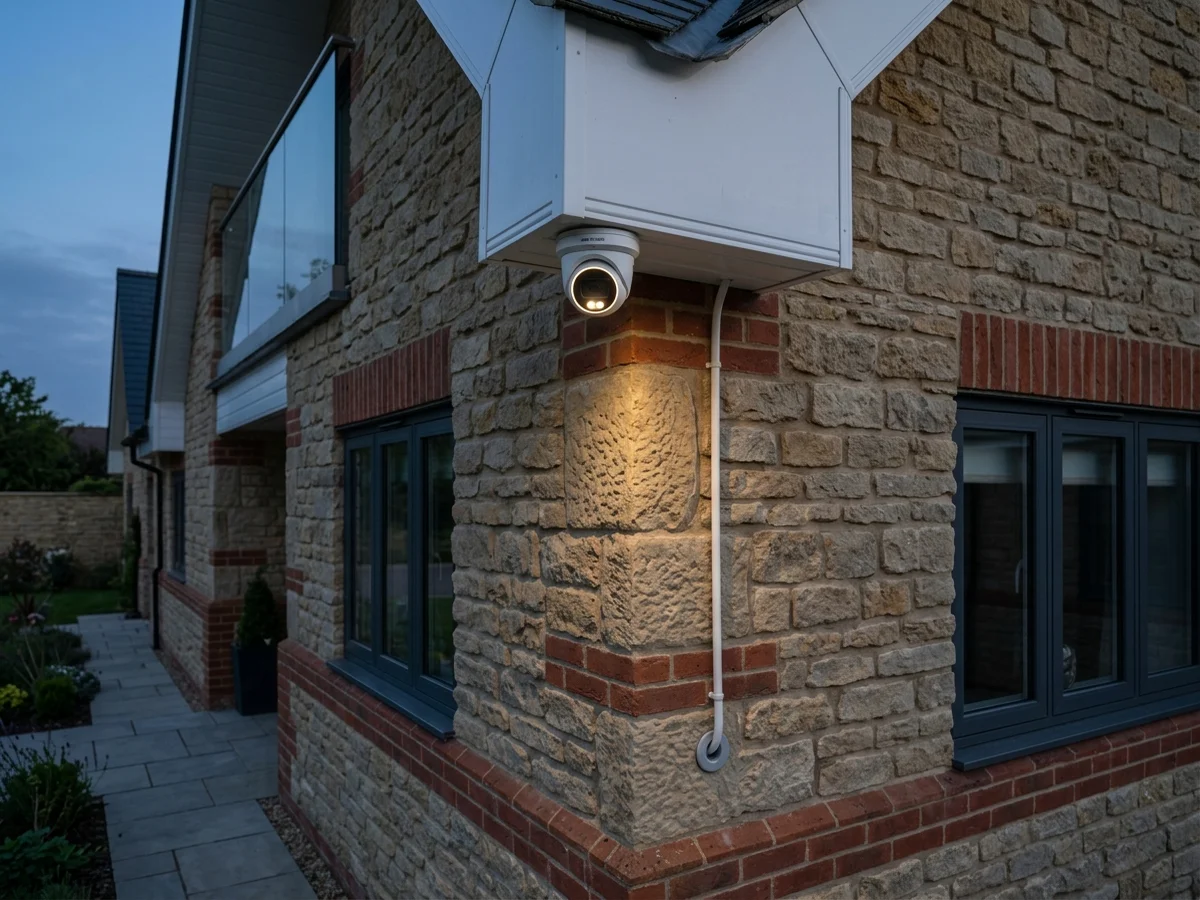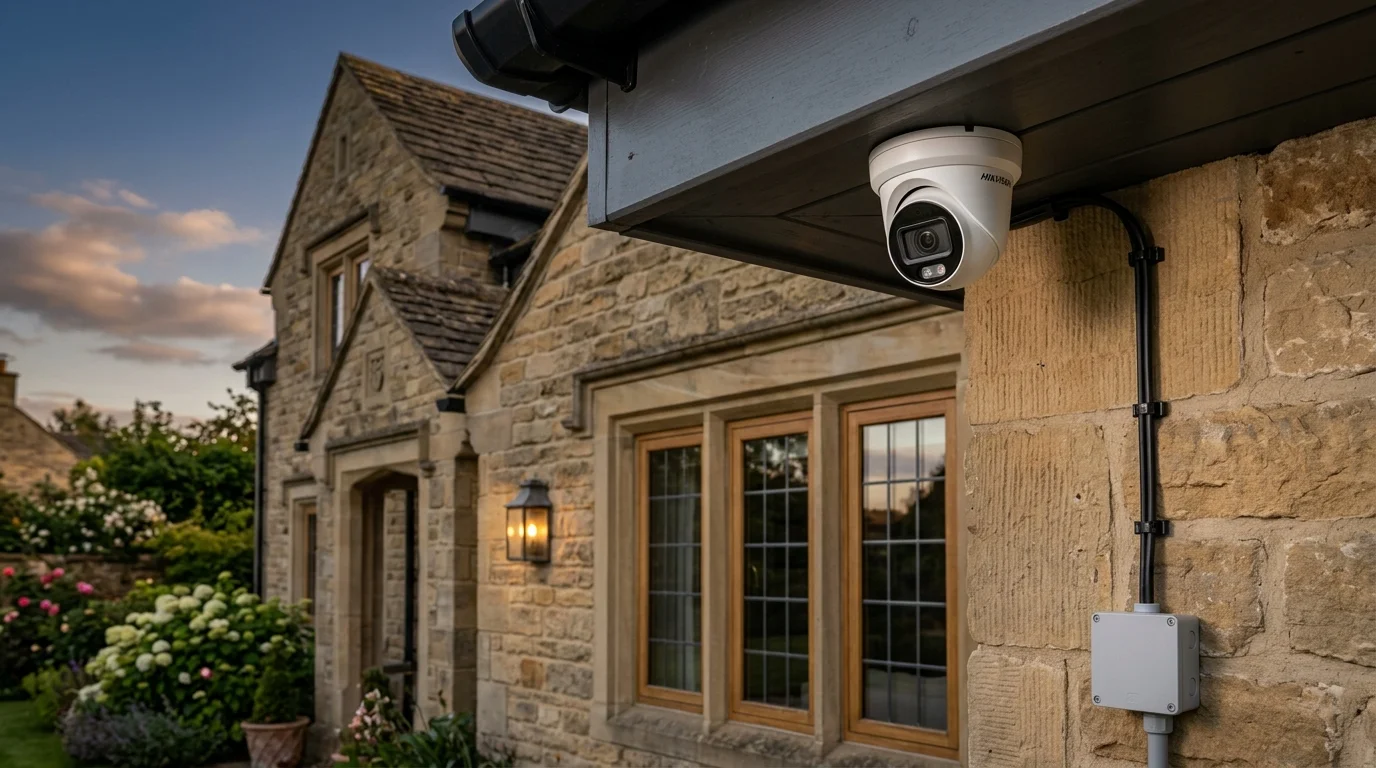

For over two decades, nocturnal home surveillance was defined by grainy, washed-out black and white infrared footage. If a crime occurred at 2:00 AM, the police were handed blurry greyscale clips where clothing colours, vehicle paint finishes, and facial details were impossible to identify. In 2026, the professional UK CCTV landscape is dominated by two engineered optical platforms: Hikvision ColorVu (celebrated for its ultra-large F1.0 apertures delivering 24/7 full-colour imaging) and Dahua TiOC (Three-in-One Camera, famed for combining full-colour video with active deterrence red/blue police strobes and audio sirens). In this engineering face-off, lead installer Gary Pearce examines which flagship system delivers superior protection for UK properties.
🔍 The Police Evidence Reality
UK police forces report that over 80% of night-time CCTV footage is rejected as evidentially unusable because infrared glare whitewashes facial features and renders vehicle colours indistinguishable. 24/7 full-colour optical sensors solve this by capturing accurate pigment data—confirming whether a getaway car was navy blue or dark grey, and whether an intruder wore red or black clothing.
1. Optical Physics: How Hikvision ColorVu Achieves Pitch-Black Colour
Hikvision ColorVu cameras achieve vivid colour in 0.0005 lux darkness through two core optical breakthroughs:
- Massive F1.0 Super-Aperture Lens: The aperture opening on a ColorVu camera is four times larger than standard security cameras (which use F2.0 lenses). This allows 400% more environmental photons to hit the optical sensor.
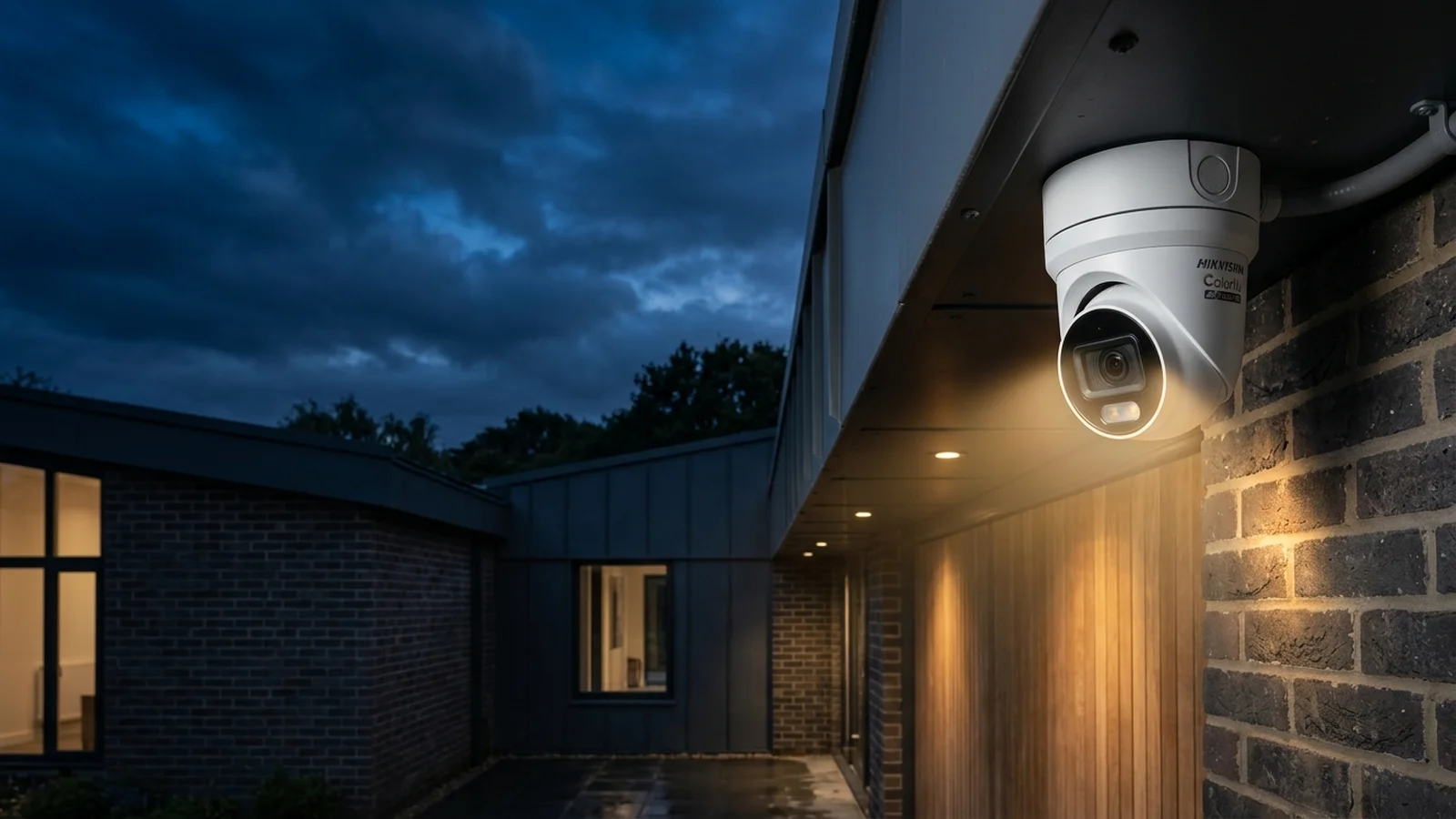
- Advanced Back-Illuminated (BSI) Sensor: A high-sensitivity sensor chip converts minuscule amounts of ambient street lighting or moonlight into clear RGB electrical signals. In total pitch darkness, an ultra-warm supplemental LED softly illuminates the immediate 5-metre zone without blinding glare.
2. Active Deterrence: Why Dahua TiOC Stops Intruders Before Damage Occurs
Optical Sensor Light Intake: F1.0 Super-Aperture vs F2.0 Standard Lens
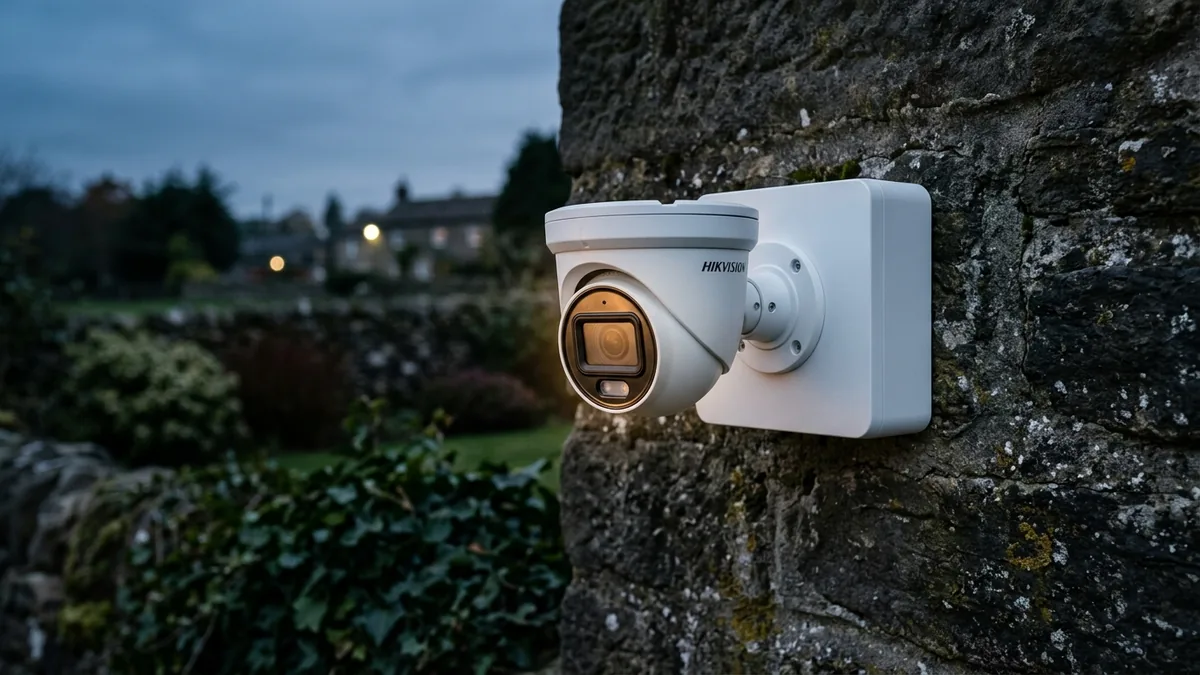
Massive aperture captures 4x more photons than conventional lenses. Soft warm LED provides gentle fill light, capturing true vehicle paint and clothing colour in total darkness.
Three-in-one proactive defence: AI perimeter detection triggers alternate red/blue police strobes and a 110dB voice siren to scare intruders away before they touch a door.
While Hikvision focuses on passive visual fidelity, Dahua TiOC takes an aggressive, proactive security approach:
- Red & Blue Flashing Police Strobes: When an intruder crosses your virtual perimeter, the camera triggers rapid alternate red and blue high-intensity strobes. Intruders immediately realize they have been detected by a commercial system and flee.
- 110dB Audio Siren & Custom Voice Warnings: The built-in weather-sealed speaker broadcasts a piercing siren or a crisp custom voice alert: "Warning: You are trespassing on private property. The police have been alerted."
- Two-Way Intercom: Homeowners can speak directly through the mobile app to challenge delivery drivers or unwanted visitors in real time.
3. Feature-by-Feature Benchmark Comparison
| Technical Feature | Hikvision ColorVu (AcuSense) | Dahua TiOC 2.0 (SMD 4.0) |
|---|---|---|
| Lens Aperture | F1.0 Super Aperture (Superior light intake) | F1.0 or F1.4 depending on model |
| Active Deterrence Strobes | White strobe flash (Select models only) | High-Intensity Red & Blue Police Strobes |
| Audio Siren Output | Beep alert / Basic speaker | 110dB Siren + Custom Voice Audio |
| False Alarm Filtering | AcuSense Deep Learning (99% accuracy) | Smart Motion Detection 4.0 (99% accuracy) |
| Insect / Spider Immunity | High (No IR heat attraction) | High (Smart dual illumination) |
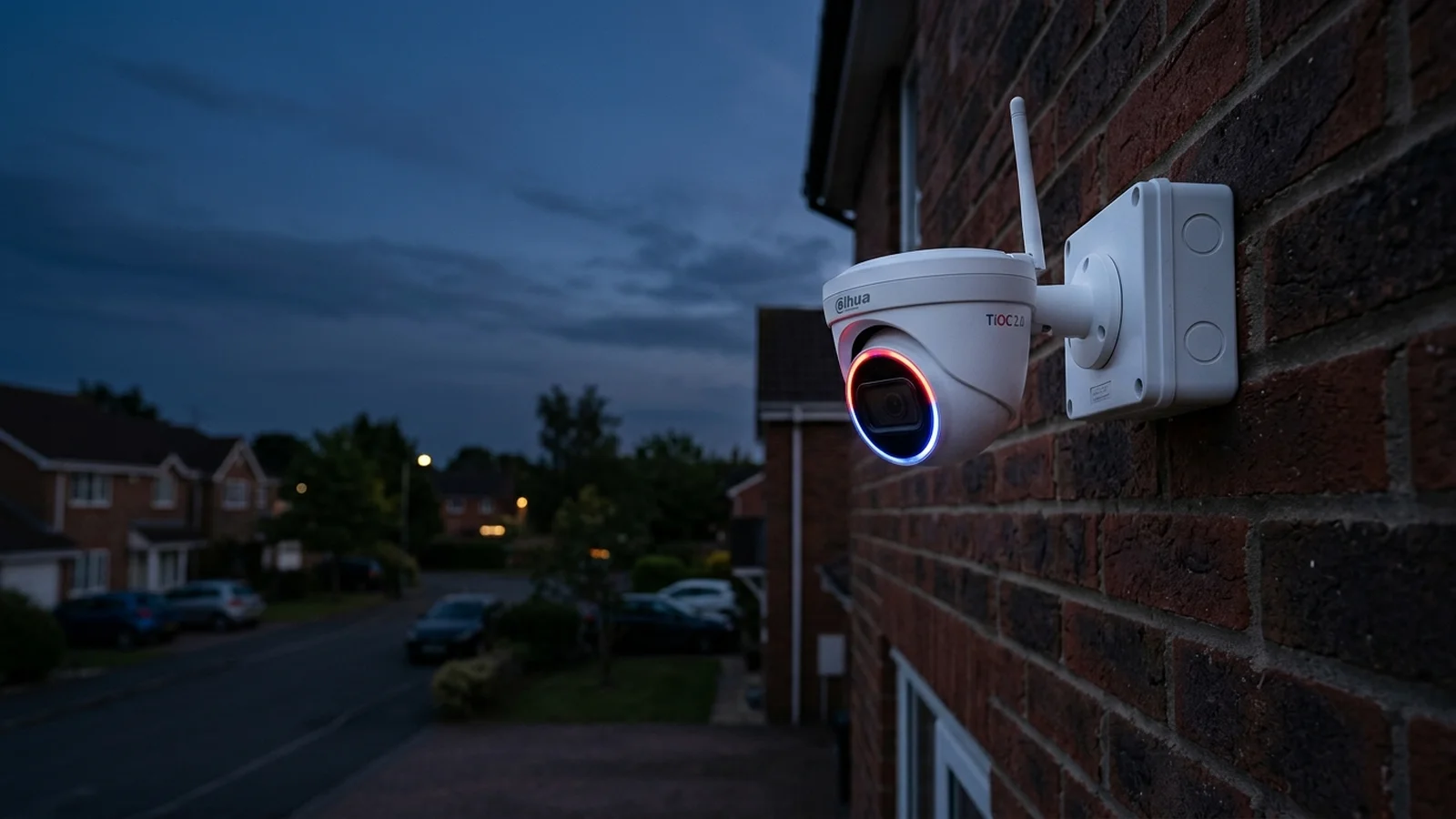
Optical Architecture: F1.0 Super Aperture vs Active Siren Deterrence
BLUF Direct Answer: Hikvision ColorVu excels in ultra-low-light full-colour clarity using a massive F1.0 aperture lens and soft warm LED lighting, while Dahua TiOC 3-in-1 cameras integrate red/blue flashing strobe lights and custom voice sirens for active real-time intruder deterrence.
Choosing between Hikvision ColorVu and Dahua TiOC comes down to whether your security priority is covert evidentiary detail or proactive perimeter deterrence. Hikvision ColorVu utilizes a 1/1.8-inch advanced sensor paired with an ultra-wide F1.0 aperture that gathers four times more light than conventional F2.0 security lenses. This produces vivid daytime-quality colour in pitch darkness without projecting intrusive bright white spot beams.
Conversely, Dahua TiOC (Three-in-One Camera) features AcuPick AI classification, red and blue police-style flashing strobes, and a 110dB built-in speaker. When an intruder crosses an AI tripwire boundary, the camera immediately broadcasts custom British voice warnings (such as 'Warning: You are trespassing on private property, police have been notified') before burglars can reach windows or doors.
| Security Feature | Hikvision ColorVu (Series 2) | Dahua TiOC 2.0 |
|---|---|---|
| Aperture Size | F1.0 Super Large Aperture | F1.4 Aperture |
| Active Intruder Siren | Optional strobe / beeper on some models | 110dB Siren & Custom Voice Audio |
| Flashing Warning Lights | Warm white supplemental light | Red & Blue Police Flashing Strobes |
| Primary Strength | Best night evidence & color reproduction | Best active deterrence to stop break-ins |
CCTV Storage Capacity & Uplink Bandwidth Calculator
Calculate the exact hard drive capacity required for 24/7 continuous local recording before loop overwrite, based on camera count, resolution, and H.265+ compression efficiency.
How to Choose Between Hikvision ColorVu and Dahua TiOC
Decision protocol based on property layout and deterrence requirements.
Assess Street Lighting & Neighbor Proximity
If cameras face close neighbors, choose ColorVu for subtle warm light; if facing isolated driveways, choose TiOC with strobe sirens.
Configure Human & Vehicle AI Tripwires
Draw perimeter detection lines in the NVR interface, filtering out moving branches, rain, and nocturnal wildlife.
Record Custom Voice Deterrence Prompts
Upload clear British English MP3 audio warnings into TiOC cameras to deter trespassers automatically.
4. Deep Learning AI: AcuSense vs SMD 4.0
Both manufacturers have solved the historical curse of false alarms caused by rain, spiders, moving tree branches, and foxes. Using on-chip neural processing units, both AcuSense and SMD 4.0 analyze incoming video frames in real time:
- Human & Vehicle Classification: Only targets with the biometric profile of a walking human or a moving vehicle trigger mobile push notifications or active sirens.
- Virtual Tripwires & Intrusion Zones: You can draw a digital boundary across your driveway. Someone walking along the public pavement triggers nothing, but stepping one foot onto your private gravel immediately trips the alarm.
For pricing information, consult our 2026 CCTV installation cost guide. To learn how to configure frame rates, see CCTV frame rate vs bitrate. For legal guidance, read UK CCTV GDPR laws. To book an installation survey, view our professional CCTV installation services across Yorkshire and Lancashire.