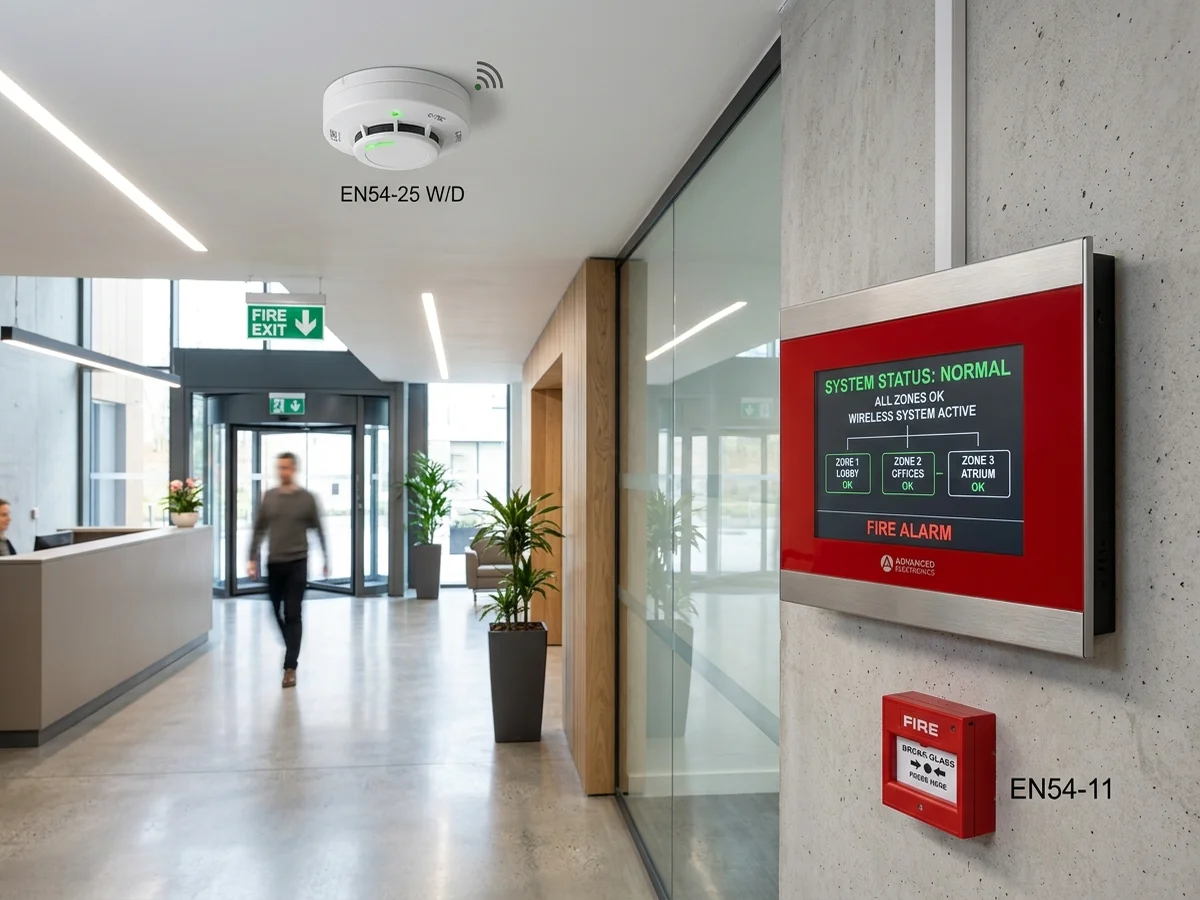

Residential fire safety legislation across the United Kingdom has undergone fundamental legal overhauls in recent years. Following the catastrophic lessons of major domestic blazes and landmark regulatory changes in Scotland, landlords, housing associations, and private homeowners across England, Wales, and Scotland are now held to rigorous compliance standards under British Standard BS 5839-6. The single most critical principle in modern fire safety is interlinking: if a fire ignites in a downstairs kitchen or utility room, every alarm throughout the entire property must sound simultaneously to wake sleeping residents upstairs. In this comprehensive legal and technical guide, certified fire installer Gary Pearce breaks down Category LD2 compliance, Grade D1 vs Grade F1 hardware, and radio-frequency interlinking.
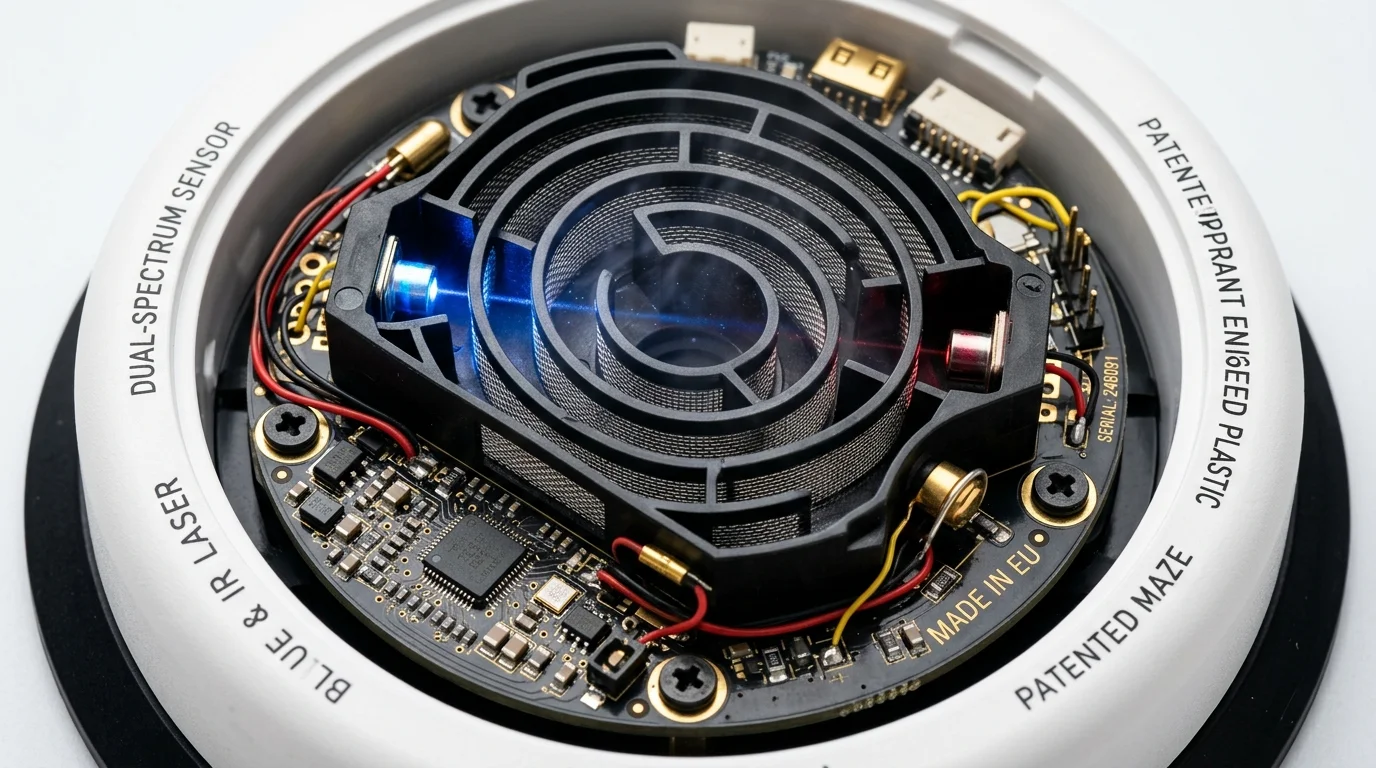
🔥 The Fatal Bedroom Acoustic Trap
UK Fire and Rescue Services statistics prove that a standard standalone battery smoke alarm sounding downstairs produces less than 45 decibels inside a closed upstairs bedroom—completely insufficient to wake sleeping adults, children, or elderly occupants. With modern synthetic furnishings, a room fire reaches lethal flashover in under 3 minutes. Interlinked radio alarms eliminate this acoustic trap by triggering all sirens across every bedroom landing in under 2 seconds.
1. UK Legal Requirements: Scotland vs England & Wales
Fire safety laws vary depending on the UK nation and tenancy status:
- Scotland (The Tolerable Standard): Since February 2022, ALL Scottish homes (both owner-occupied and private rentals) are legally required to have interlinked alarms comprising a smoke alarm in the main living room, smoke alarms in all hallways/landings, a heat alarm in the kitchen, and a carbon monoxide detector near any carbon-fuelled appliance.
- England & Wales (The Smoke and Carbon Monoxide Alarm Regulations): Private landlords and HMO operators must legally supply smoke alarms on each storey used as living accommodation and carbon monoxide alarms in any room with a fixed combustion appliance (including gas boilers and wood burners). BS 5839-6 Category LD2 is increasingly required by UK local councils and insurers.
2. BS 5839-6 Category LD2: Sensor Types & Exact Room Placement
BS 5839-6 Category LD2 Residential Room-by-Room Detector Matrix
Deploying the wrong sensor type in the wrong room leads to constant nuisance false alarms. Follow the official BS 5839-6 Category LD2 matrix:
| Room / Location | Mandatory Sensor Type | Operating Technology | Why This Sensor is Required |
|---|---|---|---|
| Kitchen | Class A1 Heat Alarm | Thermistor thermal detection (58°C) | Immune to cooking fumes, steam & burnt toast |
| Living Room | Optical Smoke Alarm | Infrared light-scatter chamber | Rapid detection of smouldering sofas, TVs & rugs |
| Hallways & Landings | Optical Smoke Alarm | Infrared light-scatter chamber | Protects primary escape routes on every storey |
| Boiler / Wood Burner | Carbon Monoxide (CO) | Electrochemical sensor cell | Detects silent, odourless toxic gas poisoning |
3. System Grades: Grade D1 (Mains) vs Grade F1 (10-Year Lithium)
BS 5839-6 categorizes fire alarms by electrical supply source:
- Grade D1 (The Rental & New-Build Standard): Mains-powered (230V) units directly wired into the lighting circuit, equipped with a tamper-proof, rechargeable 10-year lithium backup battery. Mandatory for new builds, substantial renovations, and licensed HMOs.
- Grade F1 (The Retrofit Standard): Battery-powered units utilizing sealed-for-life 10-year lithium batteries. They communicate wirelessly over 868MHz radio mesh without requiring any mains electrical wiring or ceiling plaster chasing—ideal for historic period homes.
Under BS 7671 Amendment 2 (Regulation 443.4), electrical consumer units supplying mains-powered Grade D1 interlinked smoke alarms must incorporate a Type 2 Surge Protection Device (SPD). This prevents high-voltage grid transients from damaging sensitive optical smoke sensor microchips, ensuring 10-year reliability for rental properties and private homes.
BS 5839-6:2019 Grade D1 / D2 Standards & HMO Compliance
BLUF Direct Answer: Under BS 5839-6:2019 and UK housing regulations, residential rental properties and HMOs must feature interlinked fire detection where tripping one alarm triggers all alarms in the property within 10 seconds, utilizing Grade D1 mains-powered alarms with sealed lithium battery back-up.
In Scotland and across UK rental properties, legislation requires interlinked smoke and heat alarms in every living room, hallway, landing, and kitchen. Installing standalone battery alarms that only beep in the room where fire starts is now illegal in rental dwellings and fails local council landlord licensing audits.
ADI Communications installs certified Grade D1 systems utilizing RF interlinking technology. Optical smoke sensors are placed on circulation escape routes (hallways and landings), heat alarms are fitted in kitchens to eliminate cooking false alarms, and carbon monoxide detectors protect boiler rooms. When any sensor detects smoke, the 85dB mesh network sounds simultaneously across all floors.
| Property Location | Mandatory Alarm Type | British Standard Grade | Interlink Requirement |
|---|---|---|---|
| Hallways & Landings (Escape Routes) | Optical Smoke Alarm | Grade D1 (Mains + 10-yr Lithium) | Mandatory Interlink (Sounds all floors) |
| Kitchens | Class A1 Heat Alarm (58°C trigger) | Grade D1 | Mandatory (Prevents cooking false alarms) |
| Principal Living Rooms | Optical Smoke or Multi-Sensor | Grade D1 / D2 | Mandatory in Scotland; Best practice UK |
| Rooms with Fuel-Burning Boilers/Stoves | Electrochemical Carbon Monoxide (CO) | BS EN 50291-1:2018 | Interlinked with alarm system |
Starlink & Aerial Structural Mount & Gale Tolerance Calculator
Calculate the required steel mast gauge, bracket standoff clearance, and lashing cradle tension needed to withstand up to 90mph UK Atlantic storm gusts with 0.0° beam deflection.
How to Install Interlinked Smoke Alarms to British Standards
Compliance steps for installing Grade D1 interlinked fire safety systems.
Map Alarm Categories by Room Type
Assign optical smoke alarms to hallways/landings, a heat alarm to the kitchen, and CO alarms near boilers.
Pair Wireless RF Mesh Network
Press pairing buttons in sequence to establish a secure multi-hop RF mesh between all alarm bases.
Mount 300mm Clear of Light Fittings & Walls
Fasten bases to ceilings at least 300mm away from walls and light fixtures to avoid stagnant air pockets.
Conduct System-Wide Interlink Test
Depress the test button on one unit and confirm every alarm across the building sounds within 10 seconds.
4. 868MHz Radio Mesh Interlinking Technology
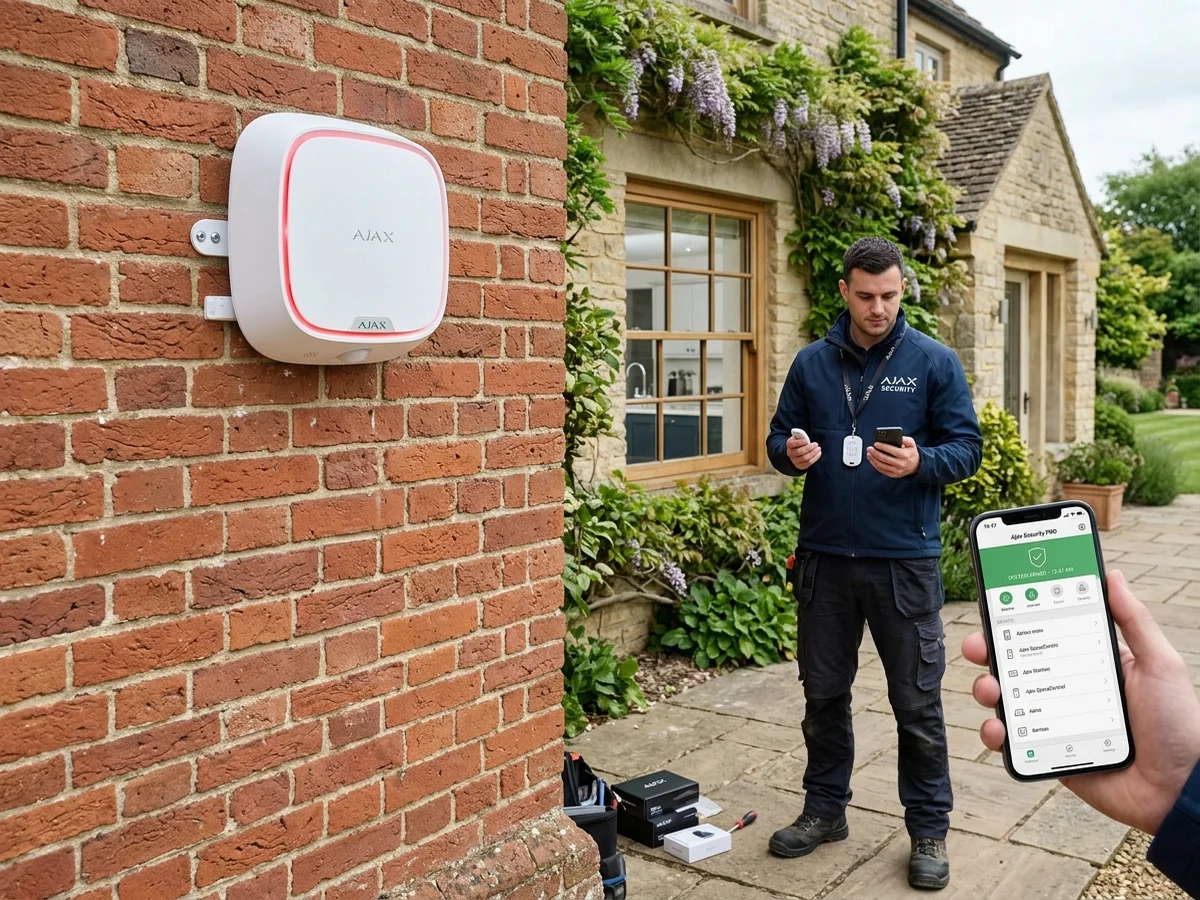
Traditional hardwired interlinking required running a 3-core-and-earth cable between every ceiling rose in the property. Modern systems (such as Aico RadioLINK+ or Ajax FireProtect 2) utilize intelligent 868MHz radio mesh networking:
Each sensor acts as both a transmitter and a repeater. If a heat alarm trips in the ground floor kitchen, it broadcasts a digital radio packet. The hallway alarm receives it, sounds its 85dB siren, and immediately re-transmits the command to the top floor landing and attic bedroom, ensuring 100% whole-house acoustic saturation in less than 2 seconds.
To safeguard against burglaries, explore our Ajax wireless alarms review and discover how burglars jam wireless alarms. For complete compliance surveys, view our certified wireless fire alarm installation services across Yorkshire and Lancashire.