TV Wall Mounting VESA Bolt & Height Guide: Trade Engineering Standards
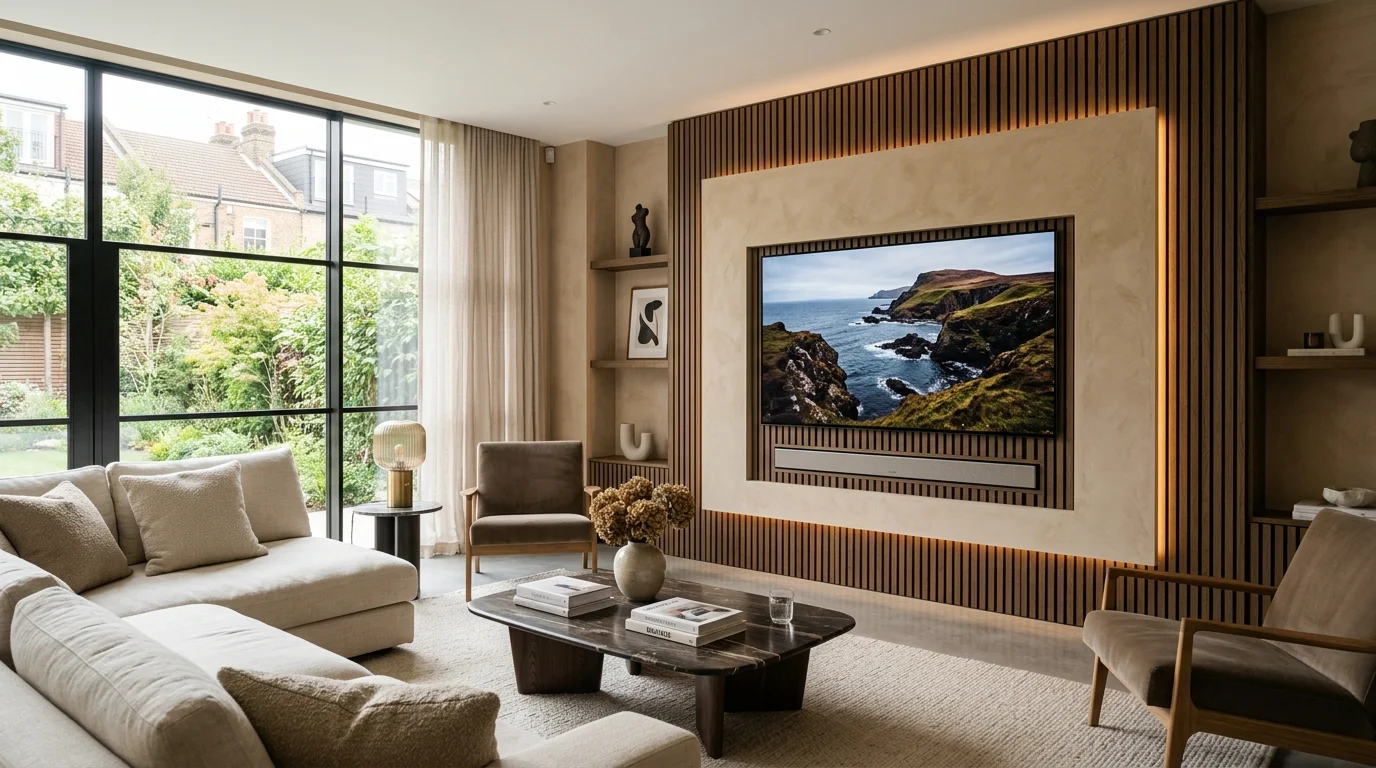
TV wall mounting failure occurs from two primary mistakes: selecting the incorrect bolt thread pitch or length (which either strips the internal chassis brass insert or punctures delicate display panels) and anchoring into hollow drywall using domestic plastic plugs. VESA machine bolts range from M4 (small screens) up to M8 (55–85+ inch panels). Optimal viewing places the screen horizontal centre line at 107 cm from the floor for low sofas, 118 cm for dining seating, and 125 cm for bedroom viewing.
Look Up Your Exact TV Model in 30 Seconds
Check your exact VESA dimensions, required machine bolt diameter, thread engagement depth, and matched commercial brackets across 358 television models in our dedicated database.
1. The VESA FDMI Standard & Bolt Thread Mechanics
The Video Electronics Standards Association (VESA) Flat Display Mounting Interface (FDMI) defines the physical hole pattern on the rear chassis of modern flat-panel displays. While the horizontal and vertical distance between holes (e.g. 200×200 mm, 400×400 mm) is standardized, the depth of the threaded insert and bolt length required vary significantly between manufacturers.
Using a bolt that is even 5 mm too long will bottom out against the internal chassis blind hole. If forced with an impact driver, the bolt will crack the internal OLED/QLED substrate, causing catastrophic panel failure. Conversely, a bolt that is too short will engage only 1 to 2 threads in the brass mounting insert, leading to stripped threads and sudden bracket detachment under the dynamic leverage of a full-motion articulating arm.
| Screen Diagonal | VESA Pattern (mm) | Metric Bolt Size | Thread Pitch | Typical Thread Depth | Chassis Weight |
|---|---|---|---|---|---|
| 24"–32" | 100×100 / 200×100 | M4 | 0.70 mm | 5–10 mm | 2.5–4.5 kg |
| 40"–50" | 200×200 / 300×200 | M6 | 1.00 mm | 8–16 mm | 6.0–12.5 kg |
| 55"–65" | 300×300 / 400×300 | M6 / M8 | 1.00 / 1.25 mm | 15–30 mm | 14.0–25.0 kg |
| 75"–85" | 400×400 / 600×400 | M8 | 1.25 mm | 25–45 mm | 28.0–45.0 kg |
| 98"–115"+ | 600×400 / 800×400 | M8 / M10 | 1.25 / 1.50 mm | 35–50 mm | 60.0–95.0 kg |
2. Wall Substrates & Structural Anchor Sizing
The bracket is only as reliable as the substrate it is secured into. In modern British residential construction, engineers encounter five distinct wall types, each requiring calibrated drilling methods and anchors:
Drilled with an 8–10 mm masonry bit. Secured using heavy-duty M8×80 mm steel coach screws seated in heavy-gauge nylon expansion plugs. Anchors must penetrate the solid brick core, never the weak mortar line.
Lightweight aggregate blocks crumble under standard rawlplug expansion. Gary uses 100 mm multi-fin sleeve anchors or chemical resin anchoring to spread dynamic cantilever loads safely across the soft core.
Vertical 38×89 mm C16 timber studs spaced at 400 mm or 600 mm centres. Centred using electronic density multi-scanners, pre-drilled with a 5 mm wood pilot, and fastened with M6 or M8 timber coach screws.
Where brackets bridge between studs, solid steel M6 SnapToggle or GeeFix cavity anchors are deployed through an 18 mm hole. Each anchor provides 120 kg of shear resistance against the rear plasterboard face.
3. Ergonomic Viewing Height: Eliminating Neck Strain
A frequent issue in domestic installations is the “TV mounted too high” syndrome (often positioned high above deep fireplace mantels without tilt). Prolonged upward neck extension beyond 15 degrees causes cervical spine fatigue, tension headaches, and degraded contrast on non-OLED display panels.
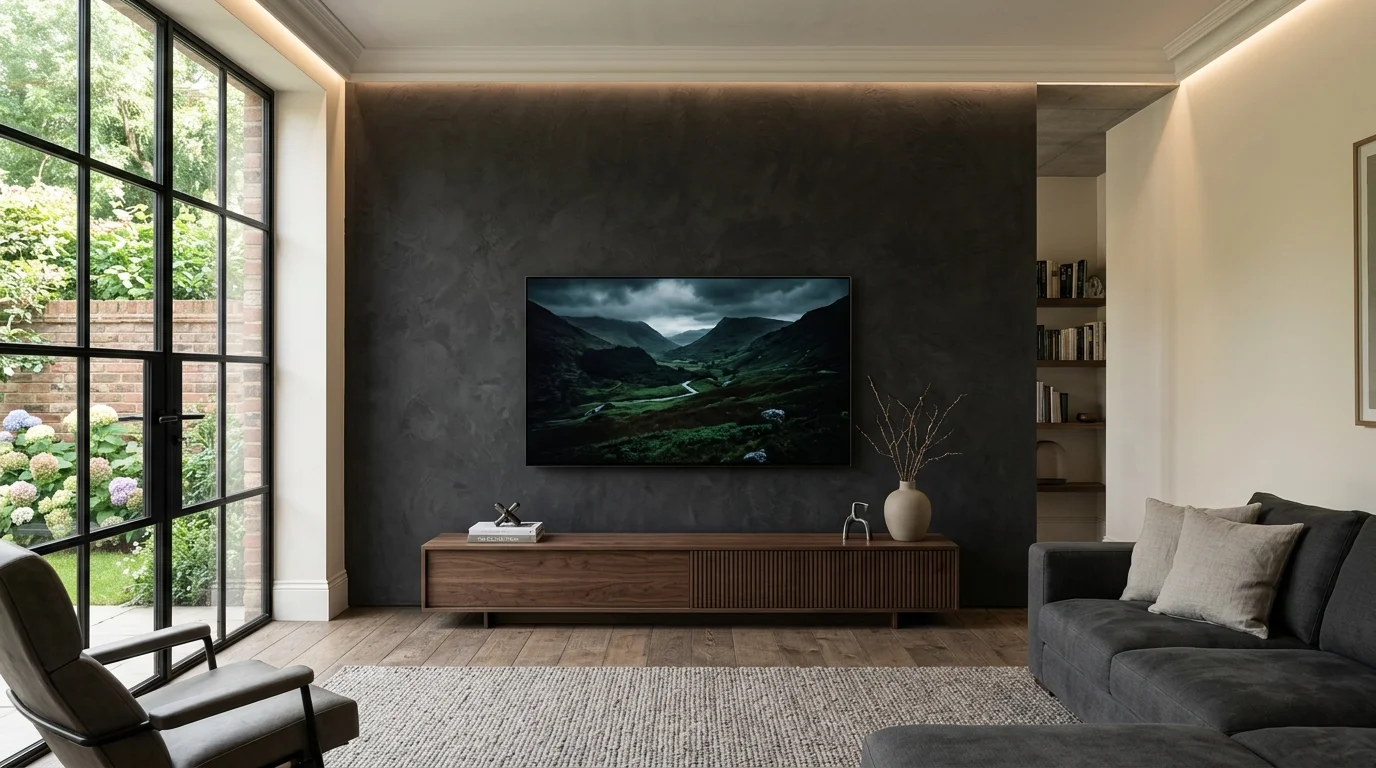
Gary uses a strict optical formula: the centre of the screen should sit exactly at sitting eye level. The table below outlines the calibrated mounting heights measured from finished floor level (FFL) to the screen horizontal centre line:
- Low Sofa Seating: 107 cm (42 inches) — standard domestic living rooms with deep, relaxed seating cushions.
- Dining or Desk Chairs: 118 cm (46.5 inches) — upright posture in open-plan kitchen diners and boardroom displays.
- Bedroom Viewing from Bed: 125 cm (49 inches) — accommodates reclined headboard pillows with a 5–10 degree downward bracket tilt to align perpendicular to the viewer’s sightline.
4. The ADI 5-Step Professional Installation Protocol
Every turnkey installation executed by Gary Pearce follows an immutable 5-stage mechanical sequence to ensure zero cable clutter and absolute structural permanence:
- Multi-Scanner Wall Verification: Electronic radar detection identifies studs, dead conduits, copper water pipes, and live 230V mains cabling before a drill bit touches the wall.
- Laser Datum Line Marking: A cross-line green laser projects the exact screen centre datum line (e.g. 107 cm) and bracket plate mounting pilot points.
- Core Drilling & Substrate Anchor Setting: Holes are drilled using rotary hammer SDS masonry or precision cavity hole cutters, blown clean of dust, and anchors set to full depth.
- Plate Torquing & Micro-Level Verification: The bracket baseplate is tightened to specified torque and verified on both horizontal and vertical axes with a calibrated Stabila spirit level.
- Chassis Fastening & Cable Dressing: TV chassis arms are fastened with manufacturer-matched bolts, hung onto the wall plate, safety locking screws engaged, and HDMI/network cables dressed through brushed faceplates or discreet D-Line trunking.
Frequently Asked Questions: TV Wall Mounting
What bolt size does my TV need for wall mounting?
TV mounting bolts follow the international VESA FDMI standard. Small screens (up to 32 inches) usually take M4 bolts (typically 5mm to 10mm length). Mid-range screens (32 to 50 inches) take M6 bolts (8mm to 16mm length). Large 55-inch to 85-inch screens almost universally require heavy-duty M8 machine screws (15mm to 45mm length). Check the exact depth using our free TV mounting planner to prevent internal panel damage.
What is the correct eye-level height for wall mounting a TV?
For domestic living room viewing from a sofa, the horizontal centre line of the television screen should sit exactly 107 cm (42 inches) from finished floor level. For dining rooms or commercial office spaces, 118 cm is standard. For bedrooms viewed from a reclined bed, 125 cm ensures optimal optical alignment without cervical neck strain.
Can you safely mount a 65-inch or 75-inch TV to a hollow stud wall?
Yes, provided the bracket is either coach-screwed directly into vertical timber studs or installed using solid steel M6 SnapToggle or GeeFix cavity wall anchors. A single SnapToggle is rated to 120 kg shear force in standard 12.5mm plasterboard. Never use plastic rawlplugs or spiral drywall speed-plugs for televisions.
Why do Samsung TVs require longer M8 bolts and spacers?
Modern Samsung Neo QLED and OLED panels have a curved or recessed back chassis with internal standoffs that sit 40mm to 45mm deep. Samsung typically supplies cylindrical plastic spacers that require M8 bolts between 43mm and 45mm in length. Using standard 20mm bracket bolts will strip the threads or fail to catch.
What is the difference between solid brick and thermalite block fixings?
Dense engineering brick holds 80mm coach screws securely in heavy-duty nylon expansion plugs. Lightweight aerated thermalite or breeze blocks crumble under concentrated expansion stress, requiring longer 100mm multi-fin nylon plugs, resin anchors, or chemical mortar capsules to distribute shear loads across the soft aggregate.
How much does professional TV wall mounting cost in the UK?
Professional TV wall mounting by ADI Communications starts from £89.99 + VAT for screens up to 43 inches on solid masonry. Large 55-inch to 75-inch full-motion cantilever installations on stud or dot-and-dab walls range from £149 to £189 + VAT including commercial-grade steel bracket hardware and cable management.
Can power cables be buried inside plasterboard walls?
Under UK Electrical Wiring Regulations (BS 7671), flexible kettle leads or appliance power cords must not be buried loose inside sealed cavity walls. Gary installs dedicated flush fused spur sockets or recessed media backboxes connected with compliant twin-and-earth cabling in prescribed electrical safe zones.