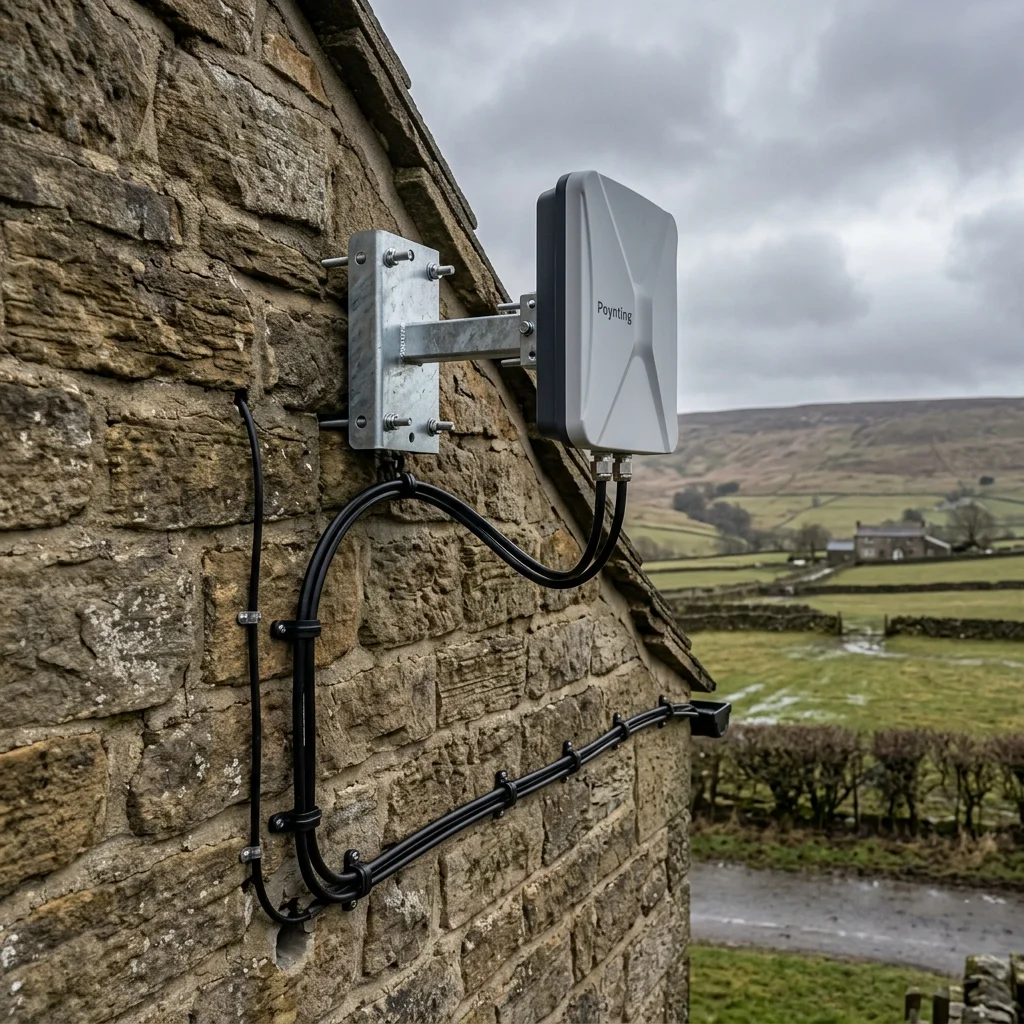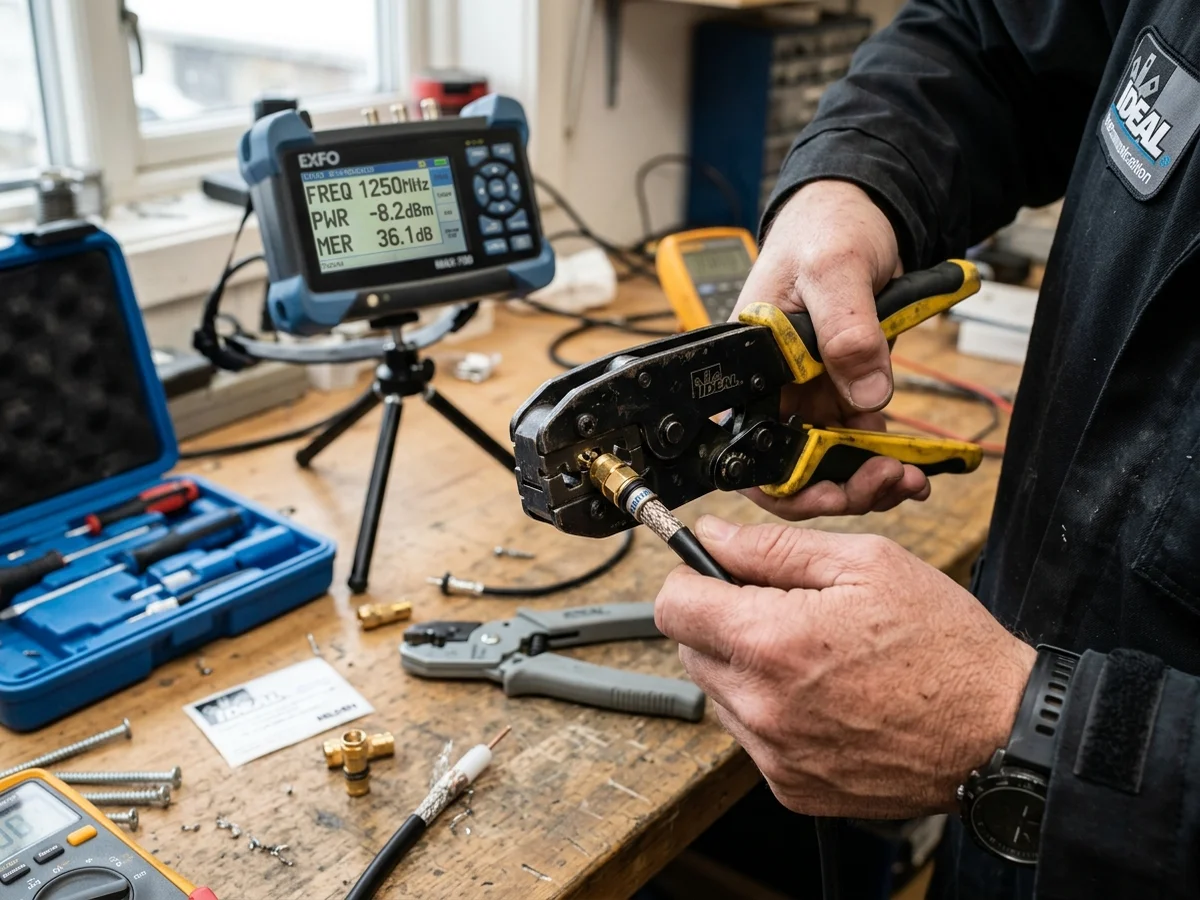
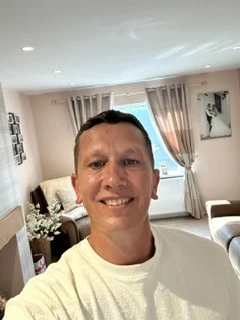
Have you noticed your digital Freeview TV channels suddenly freezing, breaking up into mosaic pixels, squeaking loudly, or displaying a persistent "No Signal" error banner—often coinciding with specific times of the day? If your TV aerial is mechanically sound and was working perfectly until recently, the root cause is almost certainly radio frequency interference from nearby 4G and 5G mobile broadband phone masts. Following Ofcom's national 700MHz and 800MHz digital clearance programmes, high-power mobile network data transmissions operate directly adjacent to terrestrial television broadcast channels. In this technical diagnostic guide, lead aerial engineer Gary Pearce explains how mobile mast transmissions swamp television tuners and reveals the certified filter solutions that restore flawless HD reception.
📡 The 700MHz Clearance Explained
Traditionally, UK television broadcast across UHF channels 21 to 68 (470MHz to 860MHz). In two major spectrum clearance auctions, the UK government sold off the top broadcast frequencies (channels 49–68) to mobile phone networks (EE, Vodafone, Three, and O2) for high-speed 4G and 5G mobile broadband. Today, digital Freeview television is restricted to channels 21 to 48 (470MHz to 694MHz). When a nearby mobile mast transmits high-power 5G data at 700MHz, it overloads older wideband TV aerials and distribution amplifiers with powerful radio noise.
1. Common Symptoms of 4G and 5G Mobile Interference
Mobile interference presents distinctive symptoms that differ from normal weather-related signal fade:
- Peak-Time Pixelation: TV reception is perfect at 11:00 AM, but between 5:30 PM and 9:00 PM (when local mobile phone usage surges), channels 40 to 48 begin stuttering and dropping out.
- Complete Loss of Specific Multiplexes: Channels broadcast on higher UHF frequencies (often HD channels like BBC One HD, ITV1 HD, or Channel 4 HD) disappear entirely while standard-definition channels remain watchable.
- Amplifier Overload (Clipping): If you have an active masthead booster or multi-room amplifier in the loft, the high-power mobile signal overdrives the internal amplifier transistors, creating harmonic distortion across every television in the house.
2. The Solution: High-Rejection Group T (Ch 21–48) LTE Filters
UHF Spectrum Clearance: Freeview TV (470–694MHz) vs Mobile 4G/5G Bands
Broadcast frequencies: 470MHz to 694MHz. Passes through high-rejection LTE filter with under 1.5dB insertion loss for crystal-clear HD viewing.
Broadcast frequencies: Above 694MHz. Attenuated by over 50dB by the filter, preventing cellular tower transmissions from overloading TV tuners.
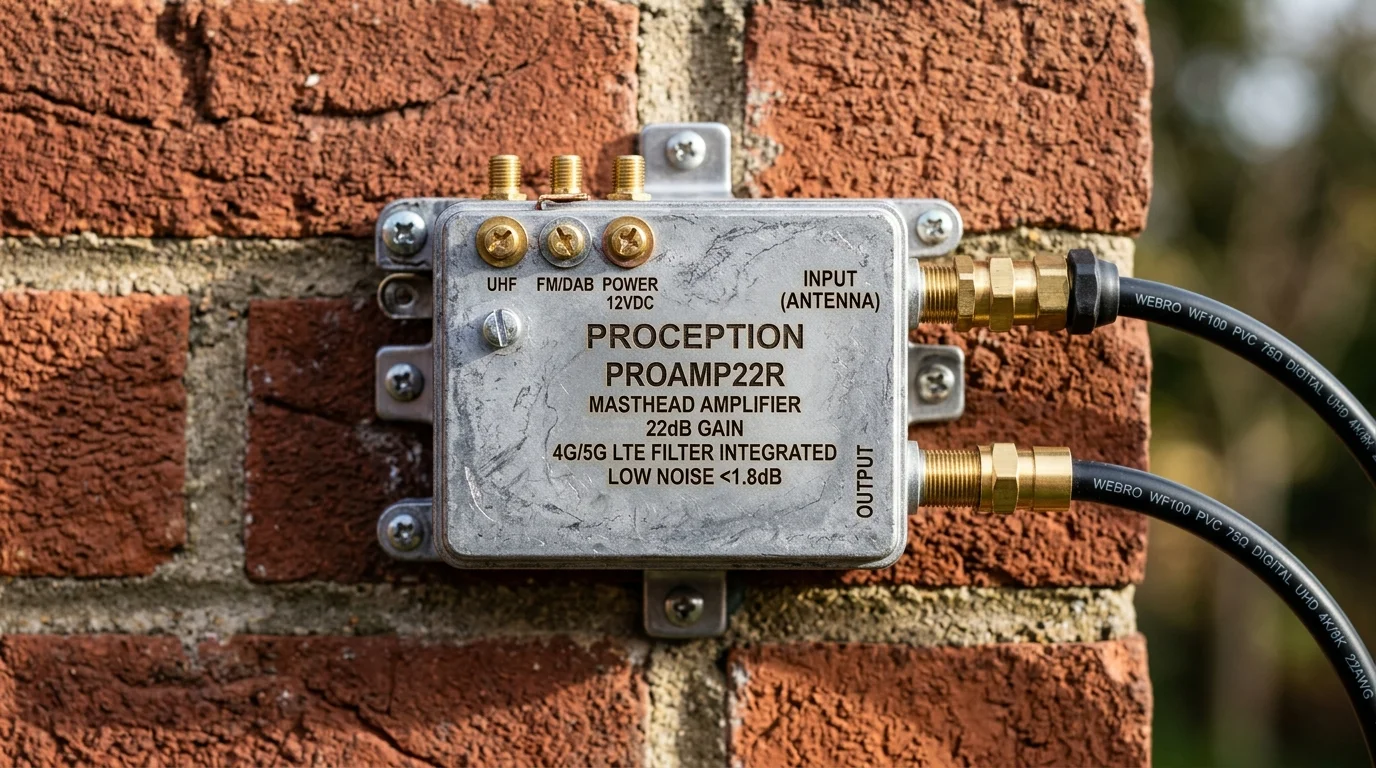
Eliminating mobile interference requires installing a CAI-benchmarked 700MHz/800MHz LTE Low-Pass Filter:
- Steep Frequency Cutoff: The filter allows frequencies between 470MHz and 694MHz (TV channels 21 to 48) to pass with less than 1.5dB of insertion loss, while providing over 50dB of active rejection against frequencies above 694MHz. Mobile signals are attenuated by 99.999% before they reach your TV tuner.
- Correct Placement: The filter must be installed before any amplifier in the signal chain. If placed after an overloaded amplifier, it cannot remove the harmonic distortion already created.
The 700MHz Clearance & Telemetry Filtering Guide
BLUF Direct Answer: Mobile network operators use the 700MHz and 800MHz frequency bands for 4G and 5G cellular data, which directly borders Freeview UHF TV channels 21 to 48, causing severe Freeview picture pixelation, sound popping, and missing multiplex channels unless a certified 700MHz low-pass filter is installed.
Following Ofcom's 700MHz clearance programme, UK television broadcasting was compressed into channels 21 to 48 (470MHz to 694MHz). High-powered 4G and 5G mobile phone masts broadcasting at 700MHz (channels 49 to 60) transmit signals up to 40dB stronger than terrestrial TV broadcasts.
This overwhelming cellular energy overloads older unshielded aerial amplifiers and TV tuners, creating intermodulation distortion that manifests as broken, pixelated video or total 'No Signal' errors. Fitting an inline CAI-certified 700MHz/800MHz LTE filter or upgrading to a shielded group-T aerial rejects all cellular noise with over 45dB of out-of-band attenuation.
| Frequency Band | UHF Channel Range | Allocated Service | Impact on Freeview TV |
|---|---|---|---|
| 470 - 694 MHz | Channels 21 - 48 | Freeview Digital DTT | Normal television broadcast band |
| 694 - 790 MHz | Channels 49 - 60 | 4G & 5G Mobile Data | Major interference; overloads amplifiers |
| 791 - 862 MHz | Channels 61 - 69 | 800MHz LTE Cellular | High-power mobile phone mast transmissions |
Starlink & Aerial Structural Mount & Gale Tolerance Calculator
Calculate the required steel mast gauge, bracket standoff clearance, and lashing cradle tension needed to withstand up to 90mph UK Atlantic storm gusts with 0.0° beam deflection.
How to Diagnose and Filter 4G/5G Mobile TV Interference
Troubleshooting and filter installation steps for pixelating Freeview TV.
Identify Symptom Patterns
Notice if TV channels randomly pixelate or glitch when smart phones in the room download data or when near a cell tower.
Locate Existing Signal Amplifier
Find any aerial distribution amplifier in the loft or behind TV points; check if it has a 4G/5G filter label.
Install Inline 700MHz Low-Pass Filter
Fit a screened F-type 700MHz filter directly between the aerial downlead cable and the amplifier input.
Retune Freeview Channels
Perform a fresh automatic channel retune to lock into the clean 470MHz-694MHz broadcast multiplexes.
3. Double-Screened Cable: Why WF100 Coax is Mandatory
Even with a filter installed, poor-quality coaxial cable can act as an antenna, picking up 5G mobile signals directly through the cable jacket:
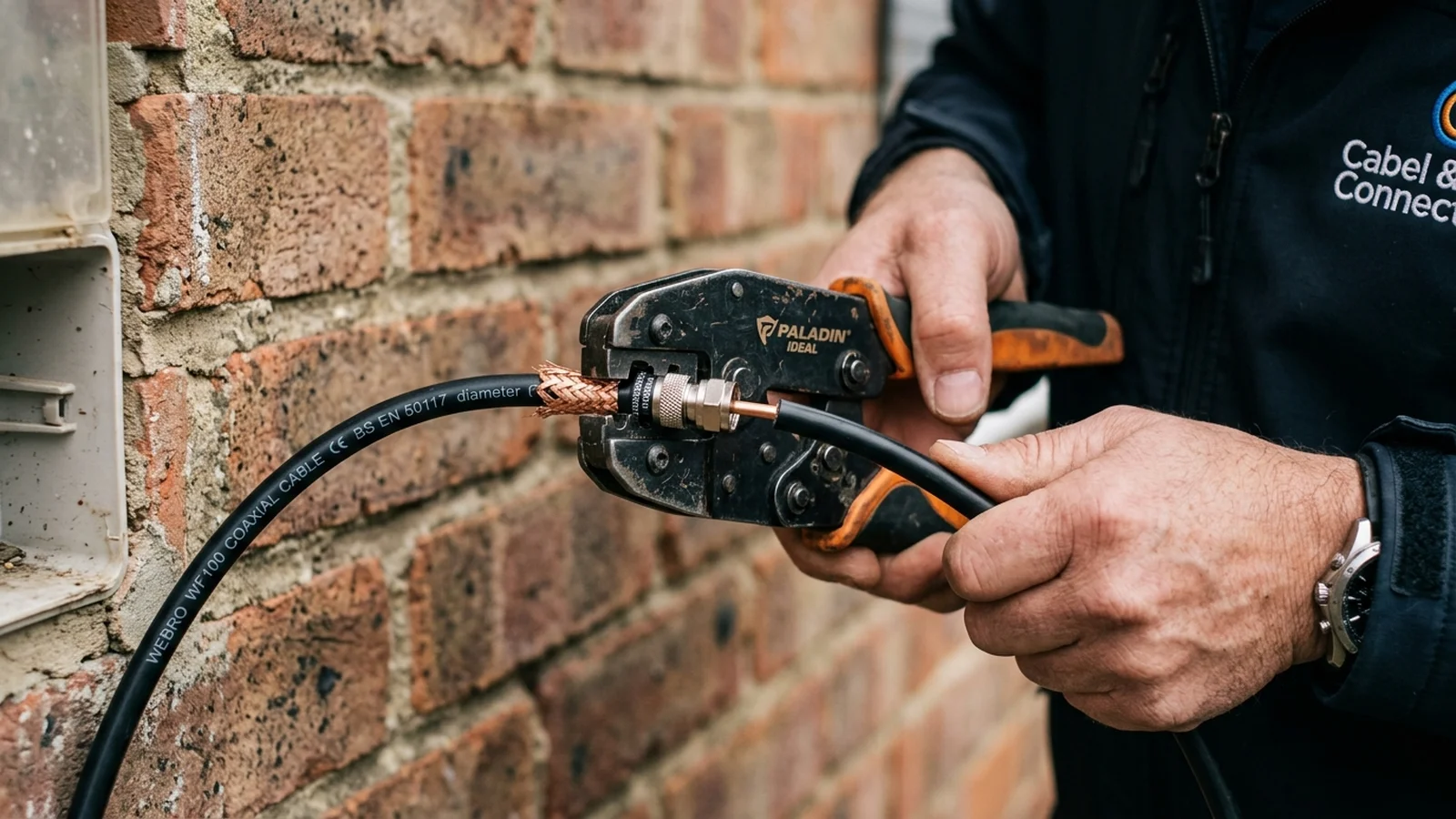
Older brown low-loss coaxial cable has a loose, single copper braid with less than 60% optical coverage. Mobile signals radiate straight through the gaps. Our engineers strictly install Webro WF100 double-screened cable, featuring continuous copper tape foil plus a dense 100% copper braid, providing certified 100dB screening immunity against cellular ingress.
For complete installation pricing, consult our 2026 TV aerial installation cost guide. Compare mounting locations in lofted vs roof TV aerials, or book a spectrum diagnostic with our professional TV aerial installation engineers across Yorkshire and Lancashire.