Can I Move My BT Socket Upstairs? Master Socket vs Extension Regulations UK
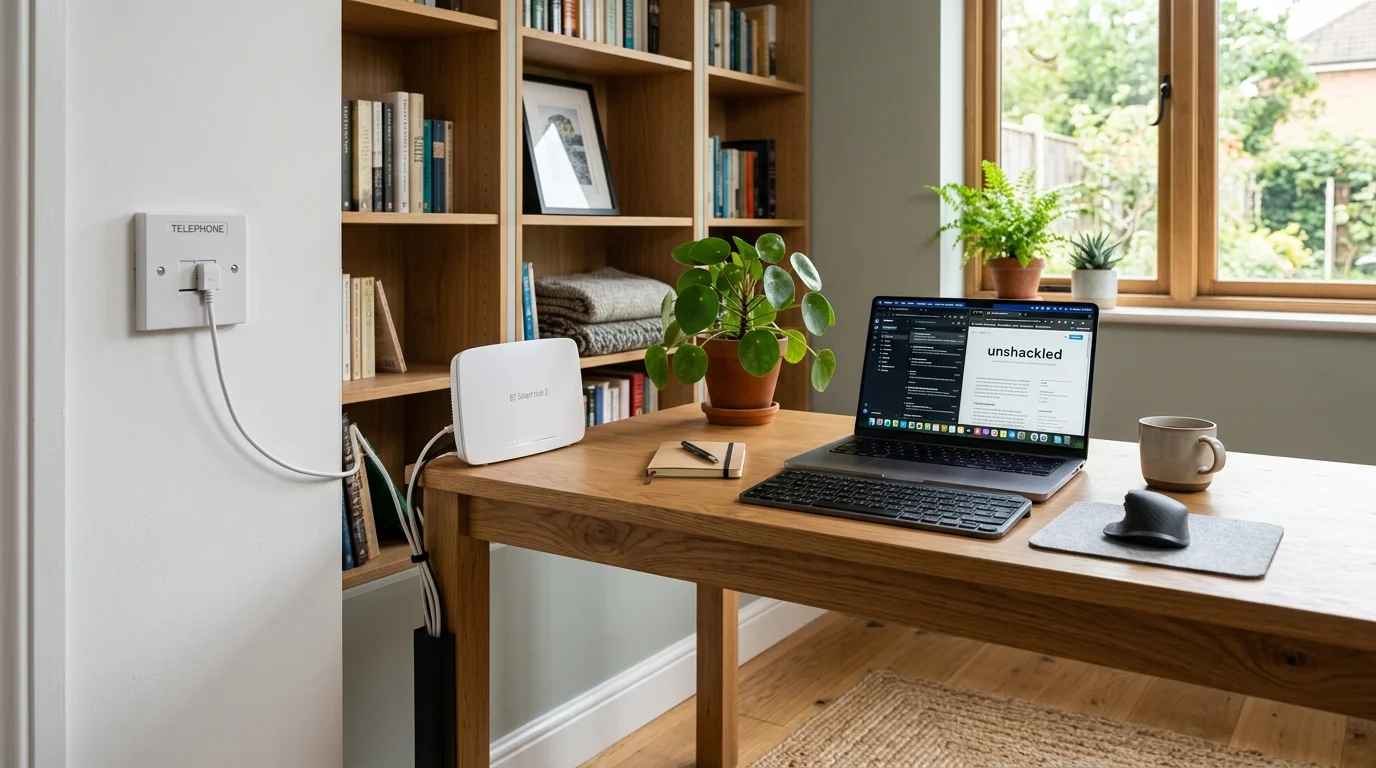
Yes, you can have your broadband connection and telephone socket moved upstairs, but UK telecommunications regulations draw a strict boundary between Openreach-owned network wiring and internal customer wiring. While the physical Openreach NTE5c master socket legally belongs to the network provider, an independent certified telecommunications engineer can either install an unfiltered data extension or relocate the line using external CW1308 / Cat6 cable without paying £160+ Openreach call-out fees.
UK Telecommunications Law: Openreach Boundary vs Customer Demarcation
Under UK telecommunications regulations, the demarcation point between the national telephone network and your private domestic property is the Openreach Master Socket (typically an NTE5a or newer NTE5c model). Everything leading up to and including the backplate of that socket belongs exclusively to British Telecom / Openreach. By law, homeowners and unauthorised contractors are prohibited from modifying or tampering with the incoming external drop-wire.
However, the removable front faceplate of the master socket—known as the customer access panel—and all wiring extending from it into your home belongs entirely to you. You are legally entitled to install, modify, and extend internal cabling as you see fit. Furthermore, experienced independent telecommunications engineers like ADI Communications can professionally extend or relocate your broadband feed using carrier-grade CW1308 copper or solid Cat6 structured cabling.
Openreach charges standard call-out fees upwards of £160 plus VAT merely to cross your threshold, with steep additional hourly labour rates for custom internal cable routes. By using an independent NVQ-certified telecoms engineer, you get bespoke, invisible cable routing through lofts, floor voids, or external elevations at a fraction of the cost.
| Service Feature | Official Openreach Dispatch | Gary Pearce (ADI Communications) |
|---|---|---|
| Standard Call-Out Fee | £160.00 to £190.00 + VAT | Fixed Transparent Quote (£89 - £129) |
| Cable Routing Aesthetic | Surface tacked along skirting/doors | Concealed through lofts, cavities & soffits |
| Broadband Performance Test | Basic sync test at master socket | End-to-end Fluke throughput & SNR margin check |
| Weekend & Same-Day Service | Extremely rare / heavy premium | Same-day & evening emergency availability |
| Internal Network Upgrades | Strictly refused (not Openreach scope) | Full Cat6/Cat6a gigabit home integration |
Hikvision ColorVu vs Infrared CCTV UK: Night Vision, DORI Standards & 4K Police Evidence
Watch Lead Engineer Gary Pearce demonstrate physical trade installation methods, field fault-finding, and certified equipment standards.
Call Gary: 07860 244 274The NTE5c Master Socket: Test Socket, Bell Wire & Filters
Modern UK telephone master sockets installed since 2016 use the Openreach NTE5c design. Unlike older sockets with screw terminals, the NTE5c features cam-lock lever terminals that do not require an IDC punch-down tool. It also incorporates an integrated VDSL interstitial microfilter that separates low-frequency voice telephony from high-frequency broadband signals right at the incoming point.
In older pre-2010 master sockets (such as the NTE5a or ancient GPO boxes), a third wire known as the 'bell wire' (pin 3) was routed to all extension sockets. This bell wire acted as a massive domestic antenna, picking up electromagnetic interference from boiler igniters, microwave ovens, and LED drivers, severely degrading VDSL broadband download speeds.
When relocating or extending a connection upstairs for a home office, an experienced engineer disconnects the obsolete bell wire completely and isolates the broadband signal onto a dedicated twisted pair, instantly stabilising line sync and reducing connection drops.
Openreach Demarcation vs Independent Extension Wiring
External Dropwire from Pole/Duct ➔ External Junction Box (GPO/BT 80) ➔ NTE5c Master Socket Backplate & Test Socket. Tampering with this carries penalties under the Communications Act 2003.
NTE5c Removable Front Faceplate ➔ Unfiltered A/B Extension Terminals ➔ Solid Copper Cat6 / CW1308 Cabling ➔ Upstairs Home Office Faceplate. Zero Openreach call-out fees. Full gigabit throughput.
Two Methods: Dedicated Data Extension vs Master Socket Relocation
There are two distinct engineering methods for getting your router and telephone connection upstairs:
Method 1: The Dedicated Cat6 Data Extension. This is the cleanest and most common solution. We leave the Openreach master socket in its current downstairs position (usually the hallway or front living room). We connect a high-grade solid copper Cat6 data extension directly to the unfiltered terminals of the master faceplate, routing the cable discretely upstairs into your home office. An RJ45/RJ11 faceplate is installed upstairs, allowing your router to achieve identical sync speed and ping as if it were plugged directly into the master socket downstairs.
Method 2: Physical Master Socket Rerouting. If the incoming external drop-wire enters your property via an exterior brick wall near the roofline, our engineer can re-route the external CW1308 line directly into the first-floor bedroom or loft office, mounting a new master socket directly on your office wall.
Lead Engineer Advice: Full Fibre FTTP Broadband
If you have upgraded to Full Fibre (FTTP), your broadband enters via an Optical Network Terminal (ONT). The ONT stays fixed, but you can run a Cat6 Ethernet WAN cable from the ONT to your upstairs office with zero speed loss over distances up to 100 metres.
Discrete Cable Routing: External Elevations vs Internal Cavities
No homeowner wants unsightly white telephone cables tacked across skirting boards, over door frames, and up staircase bannisters. Professional cabling engineering prioritises completely invisible or ultra-neat discrete pathways.
For external routes, we use heavy-duty black UV-stabilised external telephone or PE-jacketed Cat6 cable, clipped neatly along mortar lines, behind rainwater downpipes, and under eaves. Wall penetrations are sealed with silicone and fitted with downward drip loops to prevent rainwater entering your brickwork.
For internal routes, cables are fished through dry-lined stud cavities, routed under floorboards between joists, or dropped down through ceiling voids from the loft space directly into flush wall back boxes.
Need This Resolved at Your Home or Commercial Property?
Gary Pearce provides professional site visits, precision diagnostics, and turnkey installation across the North of England. All cabling and equipment is certified to British Standards with £10M Public Liability Insurance.
Frequently Asked Questions
Q1. Will moving my BT socket upstairs slow down my broadband speed?
Not if installed with high-grade solid copper Cat6 or CW1308 cable. A properly terminated data extension introduces negligible attenuation (less than 0.1dB loss), maintaining 100% of your download and upload sync speed.
Q2. Can Openreach fine me for moving my telephone socket?
Openreach does not fine customers for internal cabling work. If an independent engineer professionally relocates or extends the socket using standard carrier-grade materials without causing network interference, Openreach will simply accept the line.
Q3. How long does it take to move a telephone socket upstairs?
A standard residential socket relocation or Cat6 data extension typically takes between 1.5 to 2.5 hours, including discrete cable routing, wall plate installation, and line sync testing.
Q4. Can I move my broadband router upstairs without moving the master socket?
Yes. This is achieved by running an unfiltered Cat6 data extension from the master socket downstairs to an RJ45/RJ11 outlet in your upstairs room. Your router plugs directly into the upstairs port.
Q5. What cable is best for an upstairs broadband extension?
Solid bare copper Cat6 or Cat6a is the superior choice. It offers heavy shielding, tight twisted pairs, and future-proofs the cabling for full Gigabit local networking.
Q6. Can I remove old extension telephone sockets that I don't use?
Yes. Disconnecting redundant daisy-chained extension sockets is highly recommended. It eliminates signal reflections and antenna interference, which frequently improves broadband stability.
Q7. Does Gary Pearce provide socket relocation across Yorkshire and Lancashire?
Yes. ADI Communications provides certified telephone and broadband socket relocations, Wi-Fi mesh setups, and data cabling throughout Yorkshire, Lancashire, and Greater Manchester. Contact ADI Communications for professional field assistance.
Gary Pearce
Lead Security, Satellite & Telecommunications Engineer
Gary Pearce is the founder and lead engineer of ADI Communications, with over 25 years of hands-on installation experience across Yorkshire, Lancashire, Greater Manchester, and Cheshire. Gary holds NVQ Level 1-4 certifications in Data Cabling, Electrical & Telecommunications, and operates with £10 Million Public Liability Insurance.
Telephone Master Socket Moves & Home Cabling
Need your BT master socket shifted upstairs or into a home office? Gary Pearce provides tidy, certified domestic cabling, CW1308 voice extensions, and modern Cat6 data points.